Understand that Brazilian betting lounge design requires navigating Federal Law 14,790/2023, which establishes specific spatial, accessibility, and safety standards for licensed gaming establishments—regulations that directly impact everything from floor plans to lighting choices. Before finalizing any contemporary design aesthetic, verify your project complies with bwin bet é confiável standards and municipal zoning restrictions that often prohibit betting lounges within 500 meters of schools, hospitals, and religious institutions, while also requiring dedicated surveillance infrastructure and emergency evacuation protocols.
Consult with ANVISA health agency guidelines and local fire department codes simultaneously, as betting environments must meet stringent ventilation standards—typically 27 cubic meters per hour per person—alongside specific fire suppression systems and clearly marked emergency exits that accommodate minimum occupancy calculations. Whether you’re researching licensed operators or independent establishments, recognize that design choices around furniture placement, partition heights, and sightline management aren’t purely aesthetic decisions but regulatory requirements ensuring security camera coverage and responsible gaming protocols.
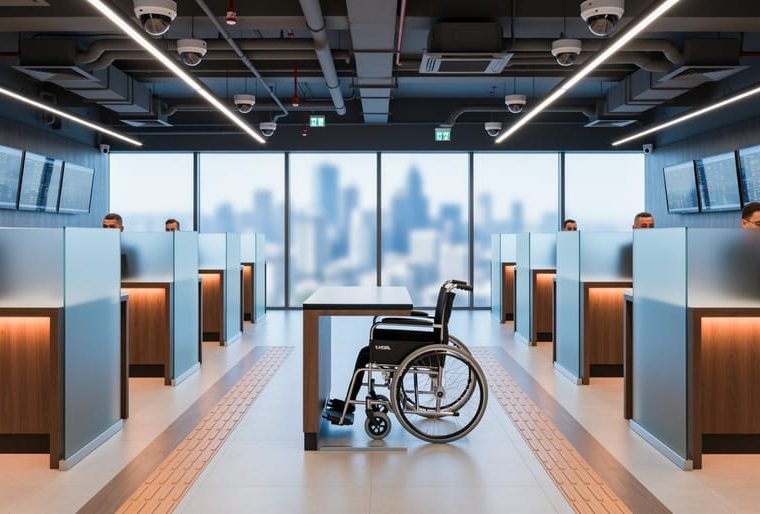
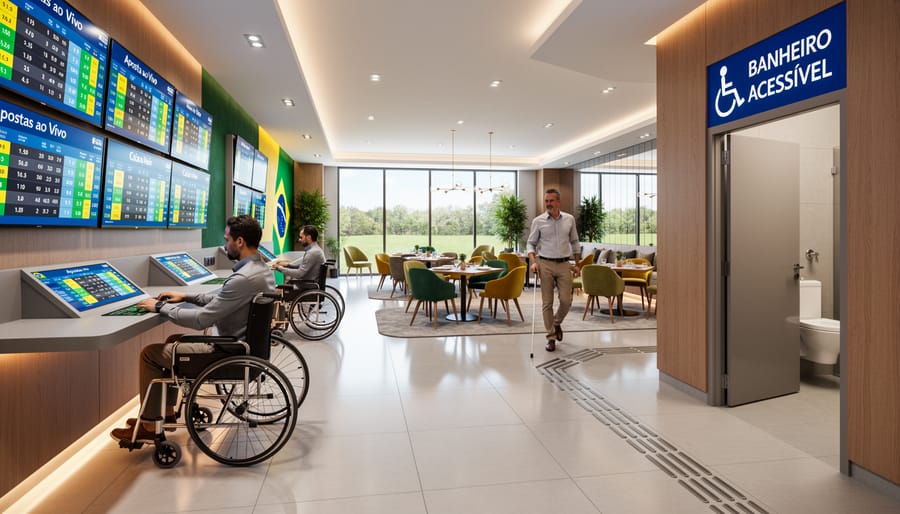
Integrate accessibility features mandated by Brazilian NBR 9050 standards from the initial concept phase, including wheelchair-accessible gaming stations, tactile floor indicators, and appropriate counter heights, rather than retrofitting compliance later. Collaborate with legal advisors specializing in gaming regulation alongside your design team, as state-level amendments to federal law create regional variations—what works in São Paulo may face additional restrictions in Rio de Janeiro, making localized expertise essential for successful project approval and long-term operational viability.
The New Wave of Brazilian Betting Regulation
From Underground to Mainstream
For decades, Brazilian betting existed in the shadows—informal loterias and underground gaming rooms operating without official oversight or design standards. This hidden economy thrived despite prohibition, creating spaces that prioritized discretion over experience. The landscape transformed dramatically when Brazil’s government recognized the economic potential of regulated sports betting and gaming.
The 2018 legislative breakthrough initiated a remarkable shift. Law 13.756/2018 opened doors for sports betting legalization, setting off a five-year regulatory evolution that would reshape the industry. As frameworks developed between 2018 and 2023, authorities realized that legitimizing betting required more than financial oversight—it demanded physical spaces that reflected responsible gaming principles.
This regulatory journey brought design requirements into sharp focus. Government agencies began establishing standards for lighting, spatial flow, and accessibility, transforming betting from clandestine activity into sophisticated entertainment. The 2023 regulations marked a pivotal moment, introducing comprehensive guidelines that addressed everything from emergency exits to color psychology.
Today’s Brazilian betting lounges represent this transformation—spaces where regulatory compliance meets inspired design. What emerged from underground necessity has become an opportunity for designers to create environments balancing excitement with responsibility, reflecting Brazil’s unique cultural identity while meeting international standards for patron safety and comfort.
Who Sets the Design Rules
Navigating Brazil’s betting lounge regulations means understanding a fascinating interplay between federal oversight and state-level authority. At the national level, SECAP (Secretaria de Avaliação, Planejamento, Energia e Loteria) establishes the foundational framework for gaming operations, including broad guidelines that touch upon physical space requirements. Think of SECAP as the architectural blueprint setter, determining minimum standards for safety, accessibility, and operational transparency that ultimately shape how these spaces look and function.
However, the real design story unfolds at the state level, where individual gaming commissions interpret and expand upon federal mandates. Each Brazilian state brings its own cultural sensibility and regulatory priorities to the table. São Paulo’s commission might emphasize urban sophistication and density considerations, while gaming authorities in Rio de Janeiro could prioritize beachfront aesthetics and tourist accessibility. This layered regulatory approach creates an intriguing design challenge: betting lounges must simultaneously honor national compliance standards while responding to regional architectural vernacular and local commission requirements. For designers and stakeholders, this means thorough research into both federal baselines and specific state regulations becomes essential before conceptualizing any project.
Space Planning Requirements That Shape the Floor
The Visibility Mandate
Brazilian gaming regulations mandate unobstructed sightlines throughout betting lounges, fundamentally transforming how these spaces are conceived and executed. Security monitoring requirements stipulate that surveillance cameras must have clear views of all gaming areas, transaction points, and customer zones without visual barriers—a rule that has become the unexpected architect of Brazil’s distinctive betting lounge aesthetic.
This visibility mandate naturally gives rise to open-concept designs that prioritize transparency and flow. High partitions, enclosed booths, and traditional room dividers simply cannot exist in these spaces. Instead, designers embrace low-profile furniture arrangements, strategically positioned seating clusters, and transparent materials like glass and acrylic when separation is necessary. The result is surprisingly elegant—spaces that feel expansive, welcoming, and surprisingly residential in their openness.
Furniture placement becomes a carefully orchestrated dance between comfort and compliance. Designers typically position seating at angles that maintain sightlines while creating intimate conversation areas. Console tables replace bulky entertainment centers, and sleek, low-backed chairs take precedence over traditional high-back options that might obstruct camera views. Floating furniture arrangements become essential, allowing security personnel to monitor the entire floor from multiple vantage points.
This regulatory framework has inadvertently elevated Brazilian betting lounge design, pushing designers toward minimalist sophistication and spatial intelligence. What began as a security requirement has evolved into a defining aesthetic characteristic—proof that creative constraints often yield the most innovative solutions.
Accessibility Beyond the Basics
Brazil’s commitment to accessibility extends far beyond the foundational requirements, creating opportunities for truly inclusive betting lounge environments that welcome all guests with dignity and comfort. While the Lei Brasileira de Inclusão (Brazilian Inclusion Law) establishes baseline standards, forward-thinking establishments are discovering that exceeding these minimums creates spaces that are not only compliant but genuinely exceptional.
The National Program for Accessibility Promotion goes beyond simple wheelchair access, requiring consideration for multiple disability types. This means designing for individuals with visual, auditory, cognitive, and motor impairments simultaneously. In betting lounges, this translates to installing tactile flooring guides that lead from entrances to betting counters, using contrasting colors with at least 30% luminance difference between surfaces, and incorporating audio announcements for results and notifications.
One particularly nuanced requirement involves counter heights and transaction areas. Brazilian regulations specify that at least one position must accommodate wheelchair users with a maximum height of 73 centimeters, but innovative designers are creating adjustable-height counters that serve all guests elegantly. Similarly, digital betting terminals must include accessible interfaces with screen readers, adjustable text sizes, and alternative input methods beyond touchscreens.
The cultural perspective here is significant: Brazilian accessibility regulations view inclusion as a fundamental right rather than an accommodation. This philosophy inspires design solutions that integrate accessibility features seamlessly into the aesthetic vision, creating spaces where accessibility enhancements become beautiful design elements rather than obvious add-ons. From wider circulation paths that improve flow for everyone to enhanced lighting that benefits all guests, these requirements elevate the entire design while ensuring genuine inclusivity.
Lighting and Transparency Standards
The Anti-Windowless Rule
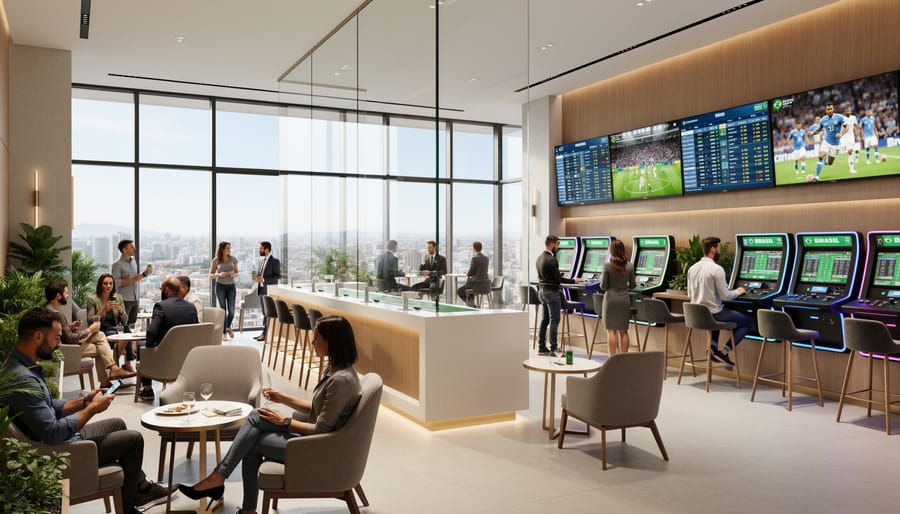
Brazil’s progressive stance on natural light in betting lounges represents a fascinating intersection of public health policy and innovative design thinking. Unlike the deliberately windowless casinos of Las Vegas, where operators traditionally limit external time cues to keep patrons engaged, Brazilian regulations now mandate either direct natural light access or sophisticated environmental simulations that mimic outdoor conditions.
This transformative requirement has sparked a renaissance in biophilic design across betting establishments. Designers are incorporating floor-to-ceiling windows with strategic UV filtering, creating spaces that feel connected to the surrounding landscape while maintaining the controlled environment gaming operations require. When natural light proves architecturally impossible, regulations permit advanced LED systems that replicate circadian rhythms, gradually shifting color temperatures throughout the day to mirror sunrise, midday brightness, and sunset hues.
The impact extends beyond mere compliance. Living green walls, indoor water features, and natural material palettes have become signature elements in Brazilian betting lounges, transforming potentially stark spaces into wellness-oriented environments. These biophilic touches reduce stress while maintaining the excitement betting establishments seek to cultivate.
International design teams working on Brazilian projects report that clients initially worried these requirements would diminish the immersive gaming atmosphere. Instead, they’ve discovered that transparency and natural elements create a more sophisticated, trustworthy brand image that resonates with contemporary patrons who value wellbeing alongside entertainment.
Illumination Intensity Requirements
Brazilian regulations mandate minimum illumination levels of 300 lux throughout betting lounges, a threshold specifically calibrated to maintain alertness and prevent the disorienting effects of dim lighting. This requirement represents a fascinating departure from casino design traditions in places like Las Vegas or Macau, where subdued lighting creates intentional time suspension. Instead, Brazil’s approach prioritizes patron wellbeing and transparent operations.
For designers, this 300-lux baseline transforms the entire lighting strategy. Gone are the dramatic shadows and moody atmospheres typical of gaming spaces. Instead, you’ll need to embrace layered lighting schemes that achieve regulatory compliance while preserving aesthetic appeal. Consider combining recessed LED panels with decorative fixtures that distribute light evenly across surfaces. The key is avoiding harsh overhead glare while ensuring no corner falls below the mandated threshold.
Our international design team has observed Brazilian lounges incorporating natural light wherever possible, using strategic window placement and light-filtering treatments to supplement artificial sources. This approach not only satisfies regulations but creates an unexpectedly refreshing environment that challenges conventional betting space design.
Smart dimming systems programmed to never drop below compliance levels offer flexibility for creating varied atmospheres during different operational hours, proving that regulatory requirements can inspire innovation rather than limiting creative expression in contemporary lounge design.
Material and Finish Compliance
Fire-Resistant Elegance
Brazilian betting lounges must navigate a sophisticated balance between fire safety compliance and luxurious aesthetics. The ABNT NBR 13772 standard classifies materials based on flame spread and smoke generation, fundamentally shaping every design decision from upholstery to wall treatments.
For seating areas where guests settle in for extended gaming sessions, designers increasingly favor inherently fire-resistant fabrics like wool blends and specially treated performance textiles. These materials achieve Class I or II-A fire ratings while offering the sumptuous feel essential to premium environments. Think deep jewel-toned velvets infused with flame-retardant technology that doesn’t compromise their tactile appeal.
Wall finishes present another creative challenge. Rather than viewing ABNT requirements as limitations, leading Brazilian designers embrace innovative solutions like mineral-based decorative plasters and specialized fire-rated wallcoverings that deliver both safety and visual drama. Metallic accents, stone veneers, and certified wood panels treated with intumescent coatings bring warmth without sacrificing compliance.
Furniture selection extends beyond fabric choices to structural considerations. Betting lounges favor pieces with fire-resistant foam cores and hardwood frames treated to meet combustibility standards. The result is spaces where every element, from the statement chandelier to the leather cocktail ottomans, tells a story of meticulous planning where regulation inspires rather than inhibits design excellence.
Acoustic Zoning Mandates
Brazilian betting lounges face stringent acoustic zoning mandates designed to protect both patrons and surrounding businesses from excessive noise pollution. These regulations typically cap ambient sound levels at 65 decibels during peak hours, pushing designers to think creatively about sound management without sacrificing aesthetic appeal.
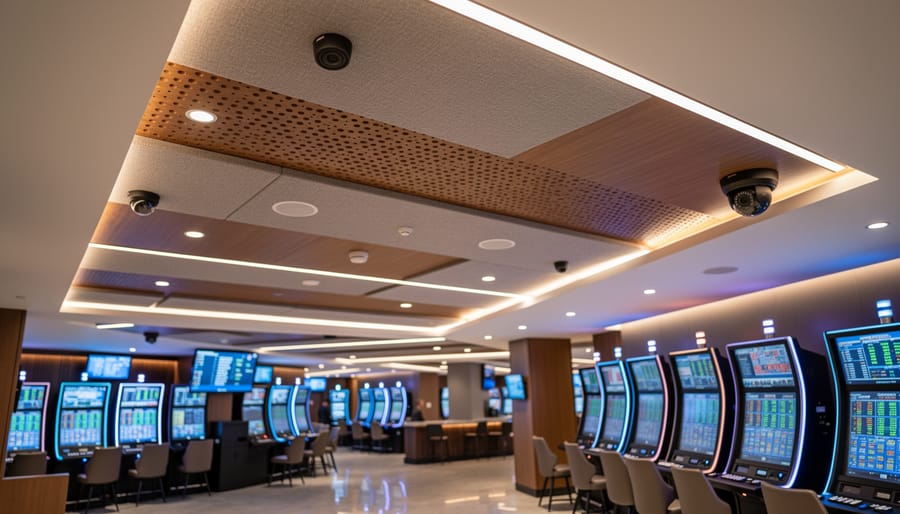
The solution lies in layering sound-absorbing materials throughout the space in ways that feel intentional rather than remedial. Designers are incorporating acoustic panels wrapped in luxurious fabrics that complement the venue’s color palette, transforming functional necessities into striking wall features. Perforated wood ceiling installations serve dual purposes, adding organic warmth while dampening sound reflection. Even upholstery choices matter—plush velvet seating and thick area rugs naturally absorb ambient noise while elevating the space’s sophistication.
One particularly innovative approach involves suspended fabric installations that create visual drama overhead while controlling sound bounce. These sculptural elements catch the eye and start conversations, proving that compliance doesn’t mean compromise. Designers also strategically position carpeted zones in high-traffic areas and incorporate living plant walls, which naturally reduce noise levels while bringing biophilic elements indoors.
The key takeaway? Acoustic requirements have actually sparked more thoughtful, layered design approaches that benefit the overall atmosphere, creating spaces where conversation flows easily and gaming excitement doesn’t overwhelm.
Signage, Wayfinding, and Responsible Gaming Displays
Making Warnings Beautiful
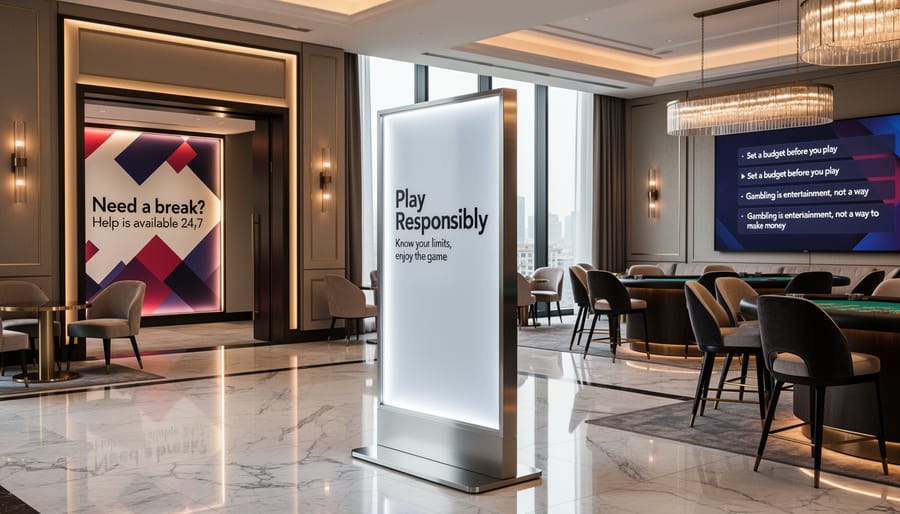
Brazilian regulations mandate that responsible gaming warnings occupy visible wall space and appear on digital displays throughout betting lounges, but compliance doesn’t mean sacrificing aesthetic appeal. Forward-thinking designers are transforming these required messages into artful installations that enhance rather than detract from the overall environment.
Consider commissioning custom typography that aligns with your design language—elegant serif fonts for sophisticated venues or contemporary sans-serif for modern spaces. One São Paulo design team collaborated with a local calligrapher to create hand-lettered responsible gaming messages that doubled as featured wall art, framed beautifully within reclaimed wood panels.
Digital displays offer even more creative freedom. Rotating messages can incorporate subtle animations, ambient lighting effects, or integrate seamlessly into broader content screens showing sports statistics and odds. The key is treating warnings as intentional design elements from the project’s inception rather than afterthoughts.
International design perspectives reveal that the most successful betting lounges worldwide view regulatory requirements as creative challenges. By selecting complementary color palettes, strategic placement near natural focal points, and materials that echo surrounding finishes, warnings become cohesive components of the spatial narrative while fulfilling their essential protective function for patrons.
Digital Display Restrictions
Brazilian regulations impose thoughtful restrictions on digital displays within betting lounges, creating a framework that prioritizes patron comfort while maintaining technological sophistication. Screen sizes face maximum dimension requirements, typically capped at 55 inches for individual displays, encouraging designers to think creatively about information presentation rather than overwhelming spaces with massive screens.
Brightness levels must remain controlled, with automated dimming systems required to prevent glare and visual fatigue. This consideration actually enhances the overall ambiance, allowing designers to craft more intimate, lounge-like atmospheres rather than stark, casino-style environments. Placement regulations mandate that screens cannot dominate sightlines from main entrances or dining areas, positioning technology as a complementary element rather than the focal point.
These limitations have inspired innovative solutions from international design teams, including multi-screen arrays that display coordinated content and integrated architectural features that blend technology seamlessly into wall treatments. The restrictions ultimately guide designers toward more balanced, human-centered spaces where technology serves the experience without overwhelming it, creating sophisticated environments that feel welcoming rather than clinical.
Surveillance and Security Integration
The Design Challenge of Total Visibility
Creating spaces that feel welcoming while meeting Brazil’s stringent surveillance requirements presents a fascinating design paradox. The regulations mandate comprehensive camera coverage with no blind spots, yet successful lounges must still feel intimate rather than institutional.
Strategic design solutions include incorporating cameras into architectural elements—think decorative ceiling medallions or sleek lighting fixtures that house surveillance equipment. This approach maintains the required visibility while preserving aesthetic integrity. Designers from our international team have observed that Brazilian lounges excel at using reflective surfaces and strategic mirror placement to extend camera sightlines naturally, reducing the number of visible devices needed.
Spatial planning becomes crucial here. Open floor plans with thoughtfully placed furniture clusters satisfy monitoring requirements while creating cozy conversation areas. Low-profile seating arrangements and transparent design elements like glass partitions maintain sightlines without sacrificing the sense of privacy guests crave.
The key lies in embracing transparency as a design principle rather than fighting it. When cameras and openness become intentional design features—highlighted through sophisticated finishes and integrated seamlessly into the overall aesthetic—they transform from obstacles into opportunities for creating sophisticated, contemporary spaces that fulfill both regulatory demands and guest comfort expectations.
Secure by Design
Security infrastructure in Brazilian betting lounges presents a fascinating design challenge: creating spaces that feel luxurious and welcoming while meeting stringent protection requirements. Cash handling areas require reinforced construction with impact-resistant glass partitions and controlled access points, yet savvy designers transform these necessities into striking architectural features. Consider using bronze-tinted security glass as room dividers that complement warm wood tones, or positioning cashier stations within beautifully crafted enclosures that feel more like jewelry displays than fortresses.
Server rooms demand climate control systems and fire suppression technology, but these technical spaces can integrate seamlessly through thoughtful planning. Concealed doors with biometric access become part of elegant wall paneling, while monitoring stations blend into the overall aesthetic through custom millwork and discreet camera placements. The key lies in treating security elements as design opportunities rather than obstacles.
Brazilian regulations specify minimum surveillance coverage and equipment standards, yet these requirements needn’t compromise ambiance. Strategic lighting design can highlight architectural details while ensuring camera clarity, and monitoring equipment can be housed in sophisticated furniture pieces that enhance rather than detract from the guest experience.
Color Psychology Meets Compliance
Brazilian regulations take a notably restrained approach to color palettes in betting lounges, recognizing that overstimulation can encourage problematic gambling behaviors. Unlike the vibrant, neon-saturated casinos found in other countries, Brazilian establishments must embrace more subdued color schemes that promote rational decision-making rather than emotional excitement.
The regulatory framework specifically limits the use of red and bright yellow, colors psychologically associated with urgency and impulsive action. Instead, designers are turning to sophisticated palettes featuring calming blues, grounding earth tones, and soft neutrals. These restrictions might initially seem limiting, but creative teams are discovering unexpected elegance within these parameters.
One São Paulo design firm recently transformed these constraints into an opportunity, crafting a betting lounge using graduated shades of sage green and warm taupe. The result feels more like an upscale members’ club than a traditional gambling venue. Natural wood accents and brass fixtures add visual interest without violating color restrictions, while strategic lighting creates depth and dimension.
International design teams working in Brazil note that these regulations actually align with global wellness design trends emphasizing mental clarity and reduced anxiety. The challenge becomes creating spaces that feel engaging and luxurious without relying on the typical high-energy color schemes.
Designers are compensating through texture, layered lighting, and carefully considered material choices. Velvet seating in deep navy, limestone feature walls, and metallic accents provide visual richness while maintaining regulatory compliance. The outcome represents a fascinating intersection where legal requirements and thoughtful design principles converge to create environments that prioritize patron wellbeing alongside aesthetic appeal.
Real-World Case Studies
Across Brazil’s betting landscape, several lounges have masterfully navigated regulatory requirements while creating spaces that captivate and inspire. These real-world examples demonstrate that compliance doesn’t mean compromising on aesthetics—instead, it becomes an opportunity for innovative design thinking.
In São Paulo’s upscale Jardins district, BetLounge Paulista transformed a 2,400-square-foot space into an elegant retreat that feels more like a sophisticated cocktail lounge than a traditional betting venue. The design team ingeniously addressed the mandatory visibility requirements by incorporating floor-to-ceiling glass partitions etched with subtle geometric patterns. These transparent dividers create distinct zones for different betting activities while maintaining the open sightlines required by regulators. Their solution to the emergency exit challenge proved equally clever: illuminated art installations double as exit signage, with custom metalwork that draws the eye naturally toward emergency routes without disrupting the space’s refined ambiance.
Rio de Janeiro’s Copacabana Gaming Lounge embraced Brazil’s accessibility mandates as a design feature rather than an afterthought. Wide corridors flow seamlessly throughout the 3,000-square-foot venue, bordered by tactile flooring that guides visually impaired guests without appearing clinical. The betting stations adjust hydraulically from 28 to 42 inches, accommodating wheelchair users and standing guests with the same technology found in high-end kitchen showrooms. Their lighting design particularly impressed regulators: a layered approach combining ambient LED strips, task lighting at betting stations, and accent lighting that creates drama while maintaining the required 500-lux minimum.
Belo Horizonte’s MinasVIP Lounge showcases how fire safety regulations inspired creative material choices. Designers specified flame-retardant velvet upholstery in jewel tones, Brazilian quartzite for countertops that naturally resist fire, and acoustic panels that meet both sound absorption and fire resistance standards. The result? A space where safety requirements elevated the material palette rather than limiting it, proving that regulatory compliance can actually enhance design excellence.
What Designers Can Learn from Brazilian Betting Regulations
Working within Brazil’s betting lounge regulations offers valuable lessons that extend far beyond a single industry. For interior designers tackling hospitality, entertainment, or commercial projects worldwide, these constraints demonstrate how regulatory frameworks can become catalysts for creative problem-solving rather than obstacles to overcome.
The Brazilian approach teaches us that limitations often sharpen design thinking. When regulations dictate specific spatial arrangements or lighting requirements, designers must dig deeper into their creative toolkit. This process frequently yields unexpected innovations—like transforming mandatory sight lines into architectural features or using required spacing guidelines to create natural gathering zones that enhance the guest experience organically.
These regulations also underscore the importance of cultural context in design. Brazilian betting lounges must balance international gaming standards with local cultural expectations around social interaction and ambiance. This dual consideration mirrors challenges designers face globally when creating spaces that honor both universal accessibility standards and regional design traditions.
Perhaps most importantly, the Brazilian framework highlights how regulatory compliance and exceptional design aren’t mutually exclusive. When designers embrace constraints as design parameters rather than restrictions, they often discover solutions that are more thoughtful, intentional, and ultimately more successful than unrestricted approaches might produce.
For designers working across various commercial sectors, the betting lounge model demonstrates how thorough regulatory research at a project’s inception saves time and resources while opening doors to innovative spatial solutions. Our international design team consistently observes that the most memorable spaces often emerge from the most constrained briefs, proving that creativity thrives when boundaries are clearly defined and intelligently interpreted.
Brazil’s progressive approach to betting lounge regulations is quietly revolutionizing how we think about gaming spaces. Rather than replicating the sensory-overload aesthetic that dominates casinos worldwide—with their windowless interiors, disorienting layouts, and deliberately timeless atmospheres—Brazilian standards are championing transparency, natural light, and human-centered design principles.
This regulatory framework has given birth to a distinctive design vernacular that feels more akin to contemporary wellness centers than traditional gaming establishments. The mandated visibility from street level, generous space allocations per patron, and integration of biophilic elements create environments that prioritize mental clarity over manipulation. These aren’t merely aesthetic choices but calculated strategies for promoting responsible gaming behavior.
What makes Brazil’s model particularly compelling is its recognition that design profoundly impacts decision-making. By requiring clear sightlines, proper ventilation, and thoughtfully controlled lighting, regulators are acknowledging that ethical design extends beyond accessibility compliance—it encompasses psychological wellbeing. For designers worldwide seeking to balance commercial viability with social responsibility, Brazilian betting lounges offer valuable lessons in creating spaces that serve rather than exploit their users, proving that regulation can be a catalyst for innovation rather than constraint.