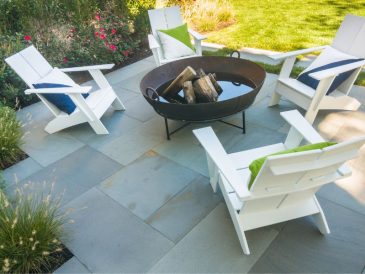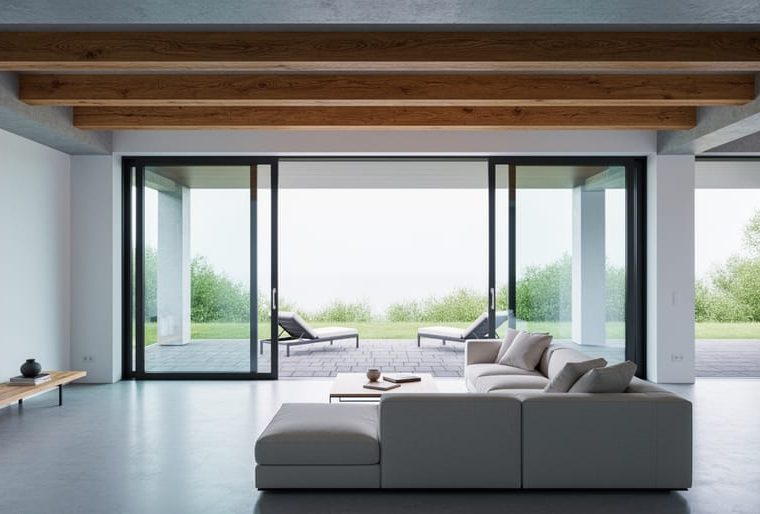
Contemporary house architecture stands at the intersection of form and function, defined by clean lines, open floor plans, abundant natural light, and an unwavering commitment to integrating indoor and outdoor living spaces. Unlike the modernist movement of the early-to-mid 20th century, contemporary design remains fluid, constantly evolving with new materials, technologies, and environmental considerations while maintaining its core principles of simplicity and purpose.
At its heart, contemporary residential architecture rejects ornamentation in favor of honest expression. Large expanses of glass dissolve boundaries between interior and exterior. Materials appear in their natural state: exposed concrete, raw wood, steel, and stone. The layouts prioritize flexibility, with flowing spaces that adapt to how people actually live rather than conforming to rigid, compartmentalized rooms. Sustainability has become inseparable from contemporary design philosophy, with passive solar strategies, high-performance building envelopes, and renewable energy systems now considered standard rather than optional.
The beauty of contemporary architecture lies in its regional adaptability. From minimalist Scandinavian homes that maximize precious daylight to sprawling California residences that embrace year-round outdoor living, contemporary design responds to climate, culture, and context. Our international design team has witnessed how these principles translate across continents, each interpretation shaped by local building traditions and environmental challenges while maintaining that distinctly contemporary aesthetic.
Whether you’re planning a ground-up build or seeking to understand the philosophy behind these striking homes, grasping what makes contemporary architecture tick requires looking beyond surface aesthetics to the intentional design decisions that create spaces genuinely suited to modern life.
Defining the Contemporary House: Architecture Beyond Trends
Contemporary house architecture operates on a fundamentally different philosophical foundation than the styles that preceded it. While modern architecture was a revolutionary break from ornamentation, and minimalism sought to strip away all but the essential, contemporary residential design embraces complexity within simplicity, acknowledging that how we live now demands spaces that can shift, breathe, and evolve.
The distinction lies not in a singular aesthetic but in a fluid response to context. A contemporary house in Tokyo looks nothing like one in Melbourne or Stockholm, yet both share core principles. They prioritize human experience over adherence to a visual formula. They respect their environment, both natural and built, rather than imposing a universal template. Where modernism declared “form follows function,” contemporary architecture suggests something more nuanced: form emerges from dialogue between function, place, and the people who inhabit the space.
- Spatial Fluidity
- The intentional blurring of boundaries between rooms, allowing spaces to serve multiple functions and adapt to changing needs rather than fixed purposes. Unlike simple open plans, spatial fluidity creates zones through subtler means, level changes, material shifts, furniture placement.
- Material Honesty
- The practice of allowing materials to express their inherent qualities without disguise, concrete stays concrete, timber shows its grain, glass remains transparent. This authenticity extends to visible structural elements and celebrates construction as part of the design narrative.
- Biophilic Integration
- The deliberate incorporation of natural elements, patterns, and connections to the outdoors throughout residential design. Goes beyond adding plants to fundamentally shaping how a house engages with light, air, landscape, and seasonal change.
- Open Plan
- The elimination of walls between traditional living, dining, and kitchen areas to create continuous, multipurpose zones. This concept has evolved beyond simple removal of barriers to thoughtful orchestration of connected yet distinct spaces.
Materiality in contemporary homes tells a story. Rather than hiding how a house is made, these designs often reveal it, exposed steel beams, board-formed concrete walls, timber structural members left visible. This isn’t about industrial chic for its own sake; it’s about establishing trust through transparency and reducing visual clutter by letting structure do double duty as finish.
The relationship between interior and exterior becomes porous. Contemporary architecture rejects the house-as-fortress mentality, instead creating graduated transitions: a covered terrace, a courtyard that’s neither fully inside nor out, floor-to-ceiling glazing that makes the garden an ever-changing artwork on the wall. The boundary still exists, contemporary homes aren’t impractical, but it’s negotiable, responding to weather, season, and the inhabitants’ mood.
This philosophical approach means contemporary house architecture remains relevant precisely because it refuses to be static. It’s architecture designed for the complexity of actual human life in 2026.
Signature Design Elements of Contemporary House Architecture
The Open Plan Revolution
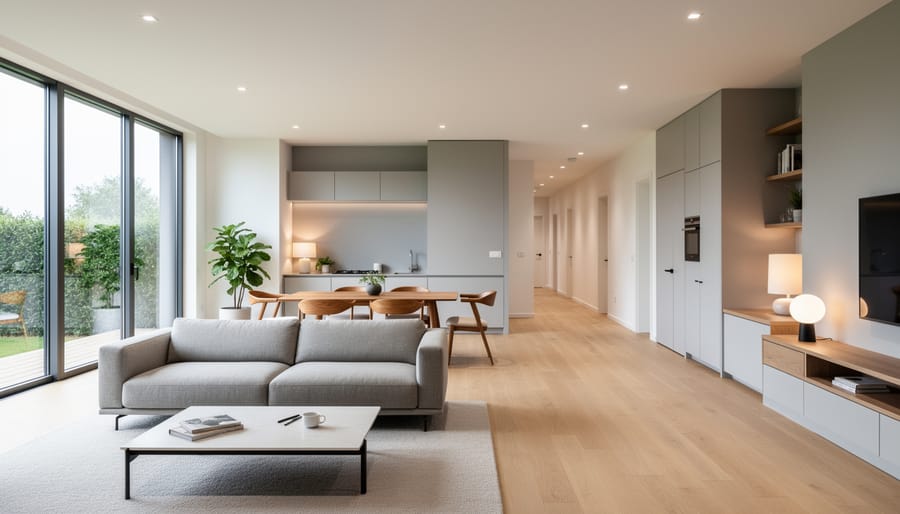
Contemporary house architecture fundamentally reimagines how we move through and inhabit residential space. Where traditional homes divided life into discrete compartments, a formal living room here, a separate dining room there, a kitchen hidden behind closed doors, contemporary design embraces fluidity. This approach reflects how we actually live in 2026: cooking while helping with homework, working from home while remaining connected to family activity, entertaining in ways that blur the line between host and guest.
The open plan isn’t simply about removing walls. It’s a carefully orchestrated strategy that uses sight lines, level changes, and material transitions to define zones without confinement. A shift in ceiling height signals the dining area. A change in flooring material anchors the living space. Built-in furniture pieces or partial screens create soft boundaries that maintain visual connection while offering acoustic separation when needed.
This spatial generosity serves practical purposes beyond aesthetics. Natural light penetrates deeper into the home when interior walls don’t obstruct its path. Air circulates more freely. Small footprints feel considerably larger. Parents can supervise young children while preparing meals. Remote workers can participate in household life without isolation.
The flexibility proves particularly valuable as households evolve. The same open space that accommodates toddler play zones can later transform into a teenager’s study area or an aging parent’s accessible living suite, adapting without major renovation as life circumstances shift.
Material Transparency and Honesty
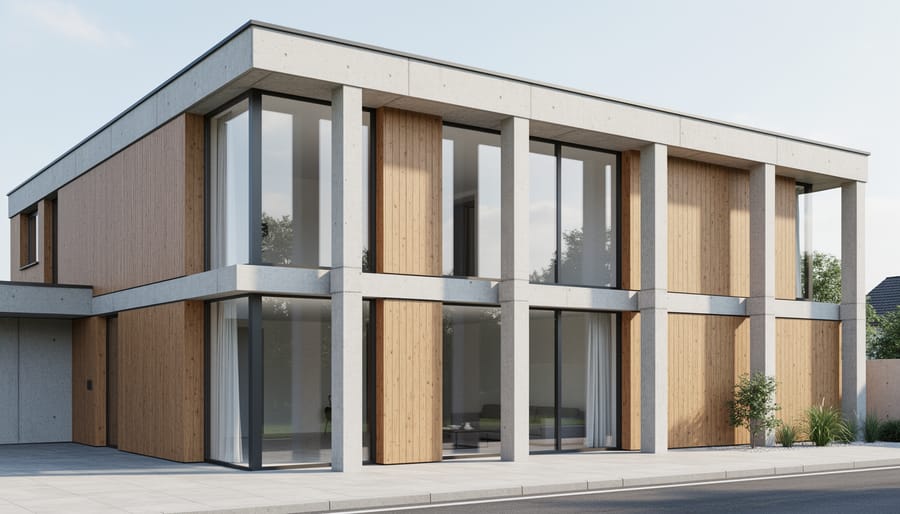
Contemporary house architecture celebrates the inherent beauty of building materials rather than concealing them behind finishes and façades. This philosophy stems from a desire for authenticity, a rejection of ornamentation in favor of letting each material express its true character and structural purpose.
Walk into a contemporary home and you’ll encounter concrete walls left deliberately raw, their subtle formwork patterns and natural variations visible rather than plastered over. Timber beams might span ceilings with their grain exposed, aging gracefully rather than hidden behind drywall. Floor-to-ceiling glass becomes not just a window but an architectural statement, its frameless expanse blurring boundaries while the material itself remains honest about what it is.
- Poured concrete: Provides thermal mass for passive temperature regulation while creating sculptural surfaces
- Exposed structural steel: Reveals the home’s skeleton, adding industrial elegance and allowing for dramatic cantilevers
- Natural timber: Brings warmth and tactility, often left unsealed to develop character through weathering
- Large-format glass: Maximizes natural light and views while demonstrating precision in modern fabrication
- Raw stone: Connects homes to their landscape through local materials that showcase geological history
This material honesty resonates with homeowners who value transparency in all aspects of life. There’s something reassuring about seeing exactly what your home is made from, understanding how it works. When materials aren’t disguised, maintenance becomes straightforward, you know what you’re caring for. The approach also reduces waste since fewer finishing layers mean less construction material overall.
Beyond practicality, these exposed materials create richly textured environments that change throughout the day as light shifts across their surfaces, offering visual interest without adding decorative clutter.
Indoor-Outdoor Integration
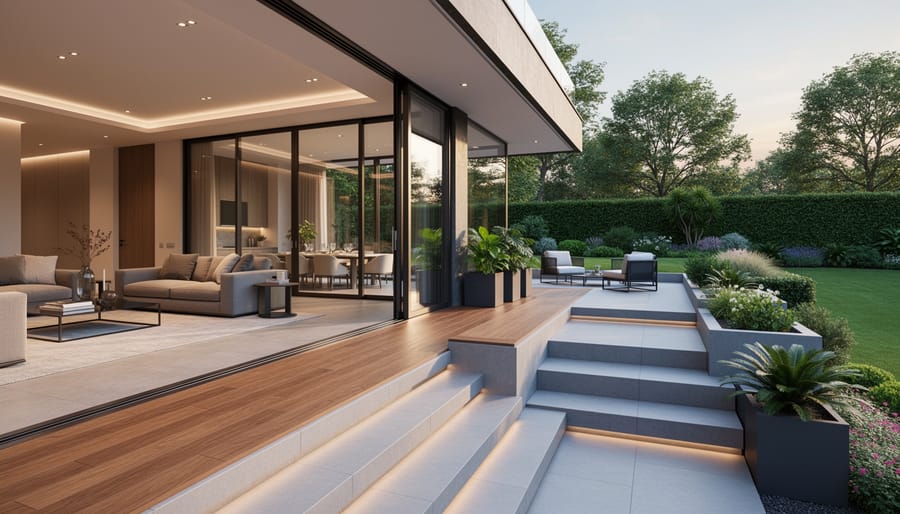
Contemporary house architecture treats walls not as absolute boundaries but as permeable membranes that mediate between inside and out. This philosophy manifests most dramatically through floor-to-ceiling glazing systems that transform rigid barriers into transparent thresholds. Corner windows disappear into slim steel frames, erasing the visual division between living room and garden. Sliding glass walls pocket completely away, converting enclosed spaces into covered terraces within seconds.
The transition itself becomes architectural territory worth designing. Contemporary homes often feature intermediate zones, covered outdoor rooms, recessed terraces, deep eaves, that belong neither fully inside nor outside. These liminal spaces extend the functional footprint of the house while blurring perceptual boundaries. A dining area might flow onto a covered deck at the same floor level, using consistent paving materials that refuse to announce where one realm ends and another begins.
Strategic landscape integration amplifies this effect. When interior floor planes extend outward as terraces, when exterior water features reflect into internal sight lines, when plantings press against glass to become living walls visible from within, the house and its site merge into a single experiential field. Research confirms that these design strategies strengthen indoor environmental quality links to occupant wellbeing, validating what contemporary architects have long understood intuitively: humans thrive when architecture connects them to natural light, ventilation, and views rather than sealing them away from the landscape.
Sustainability as Architectural Language
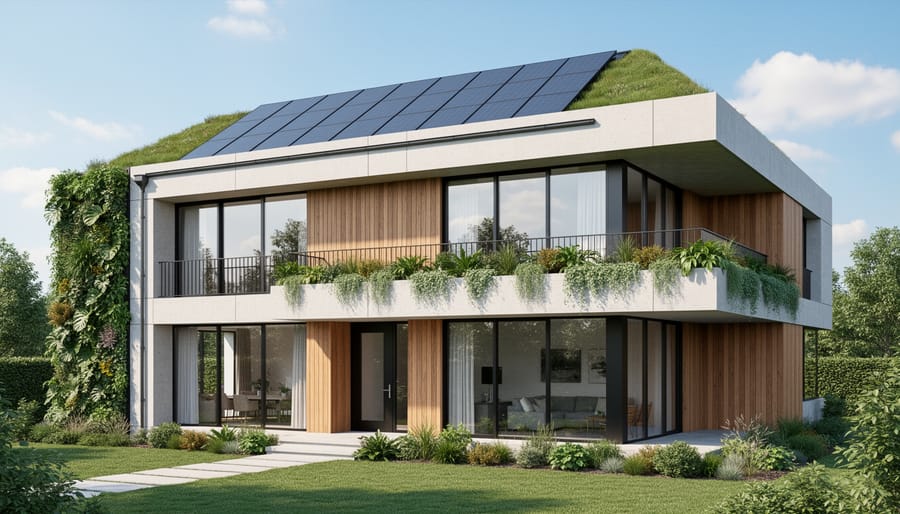
In contemporary house architecture, sustainability has evolved from an optional feature into the very syntax through which buildings communicate their values. Where previous generations treated environmental considerations as technical afterthoughts, solar panels bolted onto conventional designs, today’s architects weave ecological intelligence into every decision, from site orientation to material selection to spatial organization.
Passive design strategies form the foundation of this approach. Contemporary homes position themselves on their sites with deliberate intention, capturing winter sun for warmth while deflecting harsh summer heat. Strategic window placement creates cross-ventilation that reduces mechanical cooling needs, while thermal mass in exposed concrete floors and walls moderates indoor temperatures naturally. These aren’t visible green badges but invisible systems that make homes more comfortable and less resource-dependent.
The material palette of contemporary residential architecture reflects this environmental consciousness through both selection and application. Architects favor renewable timber over energy-intensive steel, specify locally sourced stone that minimizes transportation impacts, and embrace materials with low embodied carbon. Reclaimed wood finds new life as structural elements or cladding, while recycled metal and concrete demonstrate that sustainable choices need not compromise aesthetic sophistication.
Energy efficiency in contemporary house architecture manifests through integrated systems rather than isolated technologies. High-performance glazing balances light transmission with thermal insulation, while carefully calculated roof overhangs provide shade in summer and welcome winter sun. Many contemporary homes incorporate photovoltaic panels as design elements themselves, their geometric arrays becoming visual features rather than apologetic additions. Rainwater harvesting systems feed native landscape plantings, creating closed-loop water management that reduces both consumption and runoff.
This sustainability-as-language approach transforms how we understand contemporary residential architecture. It’s not about achieving certification targets or ticking environmental boxes. Instead, it reflects a fundamental shift in architectural thinking where buildings respond to their climate, respect their ecological context, and minimize their environmental footprint as naturally as they shelter occupants. For homeowners choosing contemporary architecture, this means living spaces that perform better, cost less to operate, and align with values of environmental stewardship without sacrificing the clean lines and spatial quality that define contemporary design.
Global Perspectives: Contemporary House Architecture Around the World
Contemporary residential architecture manifests differently across the globe, shaped by climate, culture, and local building traditions. While the core principles remain consistent, spatial fluidity, material honesty, environmental responsiveness, their expression varies dramatically from one region to another.
Scandinavia’s approach to contemporary house architecture centers on what our Copenhagen-based design consultant calls “hyggelig modernism”, spaces that balance clean-lined simplicity with warmth and livability. Large windows maximize limited winter daylight, while timber cladding and interiors create tactile warmth against stark white walls. The result is architecture that feels simultaneously minimal and deeply comfortable, with underfloor heating, triple-glazed windows, and wood-burning stoves integrated seamlessly into pared-back forms.
Japanese contemporary house architecture takes spatial innovation to extraordinary levels within constrained urban footprints. Tokyo homes pioneering contemporary design often occupy sites barely 50 square meters yet achieve remarkable volume through vertical organization and strategic light wells. Shoji-inspired translucent screens replace solid walls, creating privacy while maintaining spatial flow. Our Osaka team member notes how these houses embrace negative space as actively as built form, gardens measured in square feet become meditative focal points visible from multiple levels, fulfilling the traditional Japanese emphasis on nature connection within ultra-contemporary frameworks.
Australian contemporary architecture pushes indoor-outdoor integration further than perhaps anywhere else. Perth and Sydney homes dissolve boundaries through floor-to-ceiling sliding glass walls that pocket completely away, transforming living rooms into covered outdoor pavilions. Deep eaves and automated louvers provide solar control, while polished concrete floors flow seamlessly from kitchen to pool deck. The climate allows year-round outdoor living, and contemporary house architecture here capitalizes fully, alfresco kitchens, outdoor showers, and courtyard pools become functional rooms rather than occasional amenities.
Mediterranean interpretations blend contemporary principles with vernacular wisdom accumulated over centuries. Stone walls provide thermal mass in Greece and southern Spain, while contemporary architects reinterpret traditional courtyard configurations for natural ventilation. White volumes echo Cycladic architecture but incorporate expansive glazing positioned to capture sea breezes while shading intense summer sun.
Even cold-climate regions like Montreal and Oslo demonstrate how contemporary residential architecture adapts without compromising principles. Super-insulated building envelopes meet energy-positive requirements while maintaining the visual lightness associated with contemporary design. Geothermal systems and heat recovery ventilation operate invisibly within architecturally refined shells.
These regional variations prove that contemporary house architecture is not a monolithic global style but a responsive design philosophy. The best examples don’t impose universal solutions, they translate timeless principles through local lenses, creating homes that feel simultaneously of-the-moment and deeply rooted in place.
Making Contemporary Architecture Work for You
Bringing contemporary house architecture into your own home starts with honest self-assessment. Before approaching architects, spend time articulating what draws you to contemporary design. Is it the open spatial flow, the material honesty, the connection to landscape, or the sustainable approach? Understanding your specific motivation helps ensure you end up with architecture that serves your life rather than just copying aesthetic trends.
Finding the right architect matters enormously. Look for professionals with demonstrated experience in contemporary residential work, but pay attention to how they listen, not just what they’ve built. The best contemporary architects treat each project as unique, shaped by your site, budget, and daily patterns. Request initial consultations with two or three practices, discussing not just portfolio images but their design philosophy and collaborative approach.
- Schedule site analysis visits where the architect spends time understanding your property’s orientation, microclimate, views, and constraints.
- Articulate your spatial priorities, which activities matter most, how you move through spaces, where natural light matters critically.
- Establish a realistic budget early, allocating 15-20% for architectural fees and allowing contingency for the material quality contemporary design demands.
- Review concept sketches together, questioning how each decision serves function, sustainability, and your specific needs.
- Insist on detailed material specifications and energy modeling before finalizing design, ensuring performance matches aesthetic intention.
Budget realities deserve clear-eyed consideration. Contemporary architecture often costs more per square foot than conventional building because of custom details, quality materials, and precise execution. However, smaller contemporary homes frequently deliver more satisfaction than larger traditional houses, because thoughtful spatial planning and natural light make modest footprints feel generous. Consider building less but better.
Adapting contemporary principles works across property types. Urban infill sites benefit from contemporary architecture’s vertical orientation and strategic window placement that captures light while maintaining privacy. Suburban lots can embrace the indoor-outdoor integration that defines contemporary living. Even heritage contexts accommodate contemporary additions when approached with respect for scale and materiality rather than pastiche imitation.
Size flexibility represents one of contemporary architecture’s strengths. A 120-square-meter contemporary house can live as spaciously as a 200-square-meter traditional home when walls dissolve, sightlines extend, and natural light penetrates deeply. Question room count less, spatial quality more. The compact contemporary homes gaining traction globally prove that architectural intelligence matters more than raw area.
Contemporary house architecture has emerged as something more fundamental than a style preference, it’s a design philosophy that responds to how we actually live in 2026. The open plans, sustainable materials, and fluid indoor-outdoor spaces aren’t arbitrary aesthetic choices; they’re solutions to genuine needs for flexibility, environmental responsibility, and connection to our surroundings.
What makes this architectural approach particularly relevant is its ability to adapt. Whether you’re renovating a city terrace or building a rural retreat, contemporary principles can be scaled and tailored to your specific context, budget, and lifestyle. The emphasis on honesty in materials means you can create authentic spaces without excessive ornamentation. The focus on natural light and spatial flow can transform even modest homes into places that feel expansive and alive.
If you’re considering how contemporary architecture might reshape your own living space, start by observing how you actually use your home. Where do you gravitate? What frustrates you? Contemporary design excels at solving real problems rather than imposing predetermined solutions.
Pure Design hosts regular community events and exhibitions where you can experience contemporary architecture firsthand, ask questions of our international team of experts, and connect with homeowners who’ve made this journey. These gatherings offer something virtual tours can’t, the opportunity to feel spaces, understand materiality, and envision possibilities for your own home. Your living space deserves to reflect not just who you are, but how you want to live.