Master persuasive writing by studying UIL editorial competition frameworks, which demand clear thesis statements, evidence-backed arguments, and compelling calls to action within strict word counts. These same principles transform design portfolios from simple project galleries into narrative-driven showcases that communicate your creative vision and problem-solving methodology to potential clients and collaborators.
Apply the three-pillar editorial structure to your design communications: establish credibility through your unique perspective and experience, present logical arguments supported by project outcomes and client testimonials, and appeal to emotion by illustrating how your designs solve real human problems. UIL editorials require writers to take definitive stances on current issues while anticipating counterarguments—a skill directly applicable when crafting client proposals that address budget concerns or project scope questions before they arise.
Develop economy of language by eliminating filler words and redundant phrases, ensuring every sentence advances your central argument. UIL competitions penalize verbose writing, teaching competitors to communicate complex ideas in accessible terms. This discipline translates directly to design writing, where clarity determines whether homeowners understand your renovation recommendations or potential collaborators grasp your conceptual approach.
Practice writing with authentic voice rather than defaulting to generic industry language. Award-winning UIL editorials succeed because they reflect genuine conviction and fresh perspectives—qualities that distinguish your design communications in crowded marketplaces. Whether you’re composing project case studies, design blog posts, or community event announcements, bringing editorial rigor to your writing amplifies your professional presence and helps you stand out.
The intersection of competitive editorial writing and design communication creates opportunities for designers who can articulate their visual expertise through compelling written narratives, opening doors to speaking engagements, publication features, and stronger client relationships built on clear, persuasive dialogue.
What UIL Editorial Writing Teaches Design Professionals
Combining written narrative with visual elements creates a comprehensive design presentation that communicates both concept and execution.
UIL editorial writing competitions teach students to construct persuasive arguments with clarity, evidence, and purpose—skills that translate directly to design portfolio development. The UIL editorial writing rules emphasize taking a clear position, supporting claims with concrete examples, and maintaining consistent voice throughout a piece. Design professionals face identical challenges when presenting their work: establishing a creative perspective, documenting design decisions with visual and contextual evidence, and maintaining cohesive storytelling across multiple projects.
Both disciplines require the ability to identify your core message before building supporting content around it. Editorial writers learn to craft compelling introductions that establish their thesis immediately, just as designers must open portfolio presentations with their strongest conceptual statement. The structured approach demanded by competitive writing—organizing ideas logically, anticipating counterarguments, and concluding with impact—provides a framework that strengthens how designers articulate their creative process and defend their aesthetic choices to clients and collaborators.
The Power of a Strong Design Thesis
Every compelling editorial begins with a central thesis—a clear, defensible position that anchors the entire piece. In UIL editorial writing competitions, students learn that this foundational statement isn’t merely an opening sentence; it’s the architectural blueprint guiding every subsequent paragraph, example, and conclusion. This principle translates beautifully into design work, where establishing a cohesive concept early becomes the compass for all creative decisions that follow.
Think of your design thesis as the narrative thread running through a curated collection. Whether you’re developing a client proposal, crafting a portfolio presentation, or writing for a design publication, your central argument should answer a fundamental question: What story are we telling, and why does it matter? Just as UIL competitors learn to filter out irrelevant information that dilutes their position, designers must recognize which elements strengthen their concept and which create visual or conceptual noise.
Our international team of designers has observed this parallel across diverse cultural contexts. A furniture designer in Copenhagen approaches a sustainable collection with the same intentional clarity as an editorial writer constructing a persuasive argument. Each material choice, form decision, and functional element reinforces the overarching sustainability thesis, creating coherence that resonates with both clients and end users.
When your design thesis remains crystal clear throughout the development process, decision-making becomes more confident and efficient. You’re not simply reacting to trends or client requests; you’re evaluating each possibility against your established conceptual framework, ensuring that the final result speaks with unified, authentic voice.
Building Evidence Through Visual and Written Elements
In editorial writing, every argument requires compelling evidence—and the same principle applies when communicating design concepts. Just as a journalist supports their position with facts and quotes, designers must build their case using visual and written elements that convince clients, collaborators, and audiences of their vision’s merit.
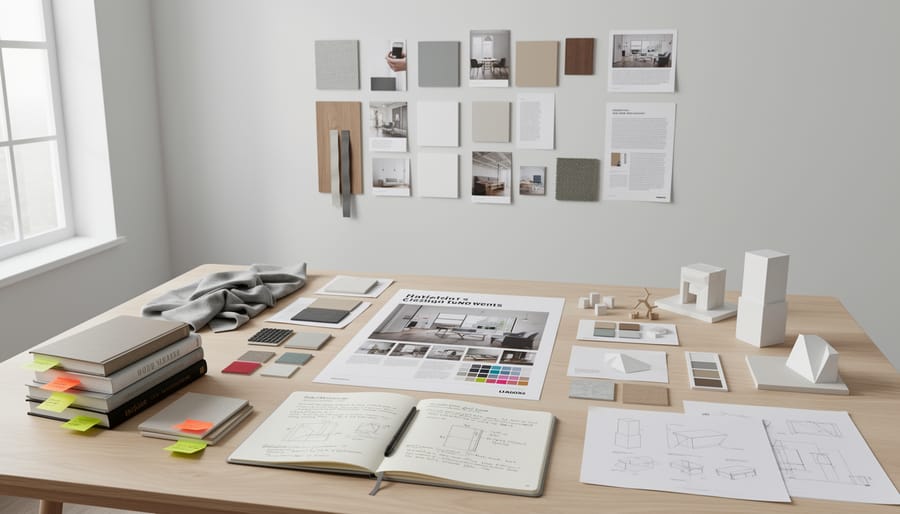
Mood boards serve as your primary visual evidence, transforming abstract ideas into tangible reference points. These curated collections of images, textures, and color palettes communicate atmosphere and intention more powerfully than words alone. When presenting to clients or submitting portfolio pieces, a well-constructed mood board demonstrates thoughtful research and establishes credibility. Think of it as your visual thesis statement—every element should reinforce your design direction.
Material samples add another layer of persuasion by engaging the tactile senses. Fabric swatches, finish samples, and texture boards transform concepts into physical reality, helping stakeholders understand how spaces will feel, not just appear. This hands-on evidence removes guesswork and builds confidence in your recommendations.
However, visual elements alone cannot carry your argument. Descriptive language bridges the gap between what viewers see and what they experience. Use precise terminology to explain why specific choices matter: describe how natural linen introduces organic warmth, or how matte black fixtures create sophisticated contrast. Your words should guide the viewer’s interpretation, connecting aesthetic choices to functional benefits and emotional impact.
Together, these elements form a complete evidentiary package that transforms subjective preference into professional recommendation, giving your design position the authority it deserves.
Structuring Your Design Narrative Like an Award-Winning Editorial
Crafting the Hook: Capturing Attention in Design Writing
The opening lines of your design narrative hold extraordinary power—they’re the threshold between a casual scroll and genuine engagement. Just as a beautifully designed entryway invites exploration of the spaces beyond, your hook should create an irresistible pull into your project’s story.
Start with specificity rather than generalities. Instead of “This kitchen renovation transformed the space,” try “Natural light flooding through the newly expanded windows now reaches corners that hadn’t seen sunshine in three decades.” The sensory detail immediately transports readers into the experience.
Another effective technique involves opening with the challenge or turning point. “When structural engineers revealed the ceiling couldn’t support traditional cabinetry, we discovered an opportunity for innovation” creates narrative tension that demands resolution. This approach, frequently employed by our international design team when documenting projects, acknowledges the creative problem-solving inherent in exceptional design work.
Consider beginning with a question that resonates with your audience’s aspirations: “What if your morning routine could feel like a spa retreat?” This technique connects the functional aspects of design with emotional transformation, speaking directly to homeowners seeking inspiration while establishing your expertise in crafting thoughtful, human-centered spaces.
Developing Your Argument: From Concept to Execution
Every compelling design narrative begins with a clear conceptual foundation, much like constructing a well-reasoned editorial argument. Start by identifying your core design philosophy—what story are you telling through this space? When presenting material choices, move beyond surface-level descriptions to explain the reasoning: perhaps you selected reclaimed oak flooring not simply for its aesthetic warmth, but because it connects the homeowner to sustainable practices while honoring the home’s historical character.
Your spatial arrangements deserve equally thoughtful justification. If you’ve created an open-concept kitchen flowing into a living area, articulate how this decision supports the client’s lifestyle—perhaps facilitating family interaction during meal preparation or accommodating their love of entertaining. Our international design team consistently emphasizes this approach: every decision should ladder back to your central thesis.
When discussing aesthetic directions, layer your explanation with cultural context and functional purpose. A minimalist Scandinavian palette might reflect the homeowner’s desire for mental clarity and simplified living, while bold Mediterranean colors could celebrate their heritage. This methodical progression—from concept through execution—transforms decorative choices into meaningful design solutions, creating narratives that resonate with clients and readers alike while demonstrating your expertise and intentionality.
Addressing the ‘Counterargument’: Anticipating Client Concerns
Every compelling editorial anticipates opposition before it arrives—the same principle transforms your design presentations from hopeful pitches into persuasive narratives. When presenting concepts to clients, address their unspoken concerns directly within your proposal, demonstrating both empathy and expertise.
Budget anxieties often dominate client thinking. Rather than avoiding cost discussions, weave value propositions throughout your presentation: “While custom millwork represents an investment, this approach eliminates the need for additional storage furniture, ultimately streamlining both aesthetics and expenses.” This editorial technique—acknowledging then reframing—builds trust.
Functionality questions deserve preemptive answers. If your design prioritizes visual impact, demonstrate how beauty serves purpose: “The open shelving concept may seem unconventional, but it encourages intentional curation while maintaining accessibility for daily essentials.”
Style preferences require delicate navigation. When introducing bold directions, validate client hesitations while expanding their perspective: “Contemporary minimalism might feel stark initially, yet incorporating warm textures and personalized art creates spaces that feel both sophisticated and deeply personal.”
Our international team has observed that clients appreciate transparency over salesmanship. By addressing concerns editorial-style—presenting multiple viewpoints before guiding toward your recommendation—you position yourself as a thoughtful collaborator rather than simply a service provider, ultimately strengthening client relationships and project outcomes.
Finding Your Editorial Voice in Design Writing
Balancing Technical Expertise with Accessibility
The key to successful editorial writing lies in building bridges between specialized knowledge and reader comprehension. Just as UIL competitions require writers to address diverse audiences effectively, design professionals must master the art of explaining concepts like spatial flow, material palettes, or biophilic design without overwhelming their readers.
Think of technical terminology as seasoning in a well-crafted recipe. A term like “negative space” becomes meaningful when you describe it as “the breathing room that allows each design element to shine.” Rather than avoiding design language altogether, weave it naturally into your narrative with context clues that illuminate meaning. For instance, when discussing millwork, you might write: “Custom millwork—the built-in cabinetry and trim that gives rooms their architectural character—transforms ordinary spaces into sophisticated environments.”
This approach mirrors UIL’s scoring emphasis on clarity and audience awareness. When writing project descriptions or design editorials, consider your reader’s journey. Are they homeowners discovering design principles for the first time, or experienced enthusiasts seeking deeper insights? Adjust your explanations accordingly, always prioritizing understanding over impressing with vocabulary.
Our international team members consistently demonstrate this balance, drawing from diverse design traditions while making concepts accessible across cultural and experience levels. The goal isn’t to simplify your expertise but to share it generously, inviting readers into the conversation rather than speaking above them.
Consistency Across Platforms: Portfolio to Social Media
Your editorial voice should feel like a familiar conversation, whether someone discovers you through a portfolio piece, an Instagram caption, or a feature in a design publication. Think of your voice as the thread that weaves through every platform, creating recognition and trust with your audience.
Start by identifying your core message. What perspective makes your design insights unique? Perhaps you bring international influences to residential spaces, or you excel at making sophisticated concepts approachable for homeowners. Once you’ve clarified this foundation, adapt it thoughtfully to each medium while preserving its essence.
For portfolio descriptions, your voice can expand with context and storytelling. Instagram captions allow for more conversational moments while maintaining your established tone. Publication submissions require formal structure but should still carry your distinctive perspective.
Create a simple style guide for yourself noting preferred vocabulary, sentence rhythms, and recurring themes. Do you favor warm, inviting language or clean, minimalist phrasing? Document the design terminology you use regularly and how you explain it accessibly.
Cross-reference your platforms regularly. Read your portfolio about statement alongside your recent social posts. Would someone recognize the same voice? Consistency doesn’t mean repetition—it means your audience feels they’re engaging with the same thoughtful designer across every touchpoint, building confidence in your expertise and strengthening your professional community connections.
Research and Fact-Checking for Design Writers
In UIL editorial competitions, students learn that compelling arguments rest on a foundation of credible sources and verifiable facts. This principle translates beautifully to design writing, where accuracy builds trust with readers making important decisions about their spaces. When you’re writing about that stunning mid-century credenza or the latest sustainable flooring trend, your claims need the same rigorous backing that would earn points in a competitive editorial round.
Think of fact-checking in design writing as your professional insurance policy. Before you declare that a particular tile is “the most durable option for high-traffic kitchens,” verify the manufacturer’s specifications. Check their testing protocols, water absorption ratings, and PEI classifications. When discussing design precedents—say, the influence of Bauhaus principles on contemporary minimalism—trace your claims back to documented sources. This diligence transforms your writing from opinion into informed perspective.
Design writers should cultivate relationships with reliable sources that strengthen their work:
- Industry publications like Architectural Digest, Dwell, and trade journals for current trends and professional insights
- Manufacturer technical data sheets and product specifications for accurate performance claims
- Design museum archives and historical collections for authentic precedent information
- Third-party sustainability certifications such as LEED, FSC, and Cradle to Cradle for environmental claims
Supporting your recommendations with industry data adds tremendous value for readers planning real projects with real budgets. When discussing kitchen layout efficiency, reference the classic work triangle research. If you’re advocating for specific paint finishes, cite VOC levels and durability studies. Our international team members regularly contribute insights from their regional design communities, bringing diverse perspectives that enrich our content while maintaining our commitment to factual accuracy. This approach respects your readers’ intelligence and empowers them to make confident design choices grounded in substance, not just style.
Persuasive Techniques for Client Proposals and Design Pitches
When designers step into a client meeting, they’re not just presenting floor plans or color palettes—they’re making an argument. This is where editorial writing’s classical persuasive techniques become invaluable tools in your professional arsenal.
The ancient Greek principles of ethos, pathos, and logos, refined through UIL editorial writing competitions, translate beautifully into design presentations that resonate and convert. Let’s explore how these rhetorical strategies can transform your client proposals from simple presentations into compelling narratives that win projects.
Ethos establishes your credibility and trustworthiness. In design pitches, this means showcasing your expertise through carefully selected portfolio pieces, professional certifications, and testimonials from satisfied clients. Our international team has observed that clients across cultures respond to authentic demonstrations of competence. Don’t just tell clients you understand sustainable design—show them your LEED certification, share case studies, and discuss industry trends with confidence. This builds the foundation of trust before you’ve even discussed their specific project.
Pathos taps into emotion, and few industries understand emotional connection like interior design. When presenting a kitchen renovation, speak to the morning coffee ritual, family gatherings around the island, or the joy of cooking together. Paint verbal pictures that help clients see themselves living in the transformed space. Use mood boards and material samples not just as visual aids, but as emotional touchpoints that connect your design vision to their deepest desires for their home.
Logos appeals to logic and reason through well-organized facts and evidence. Structure your proposals with clear timelines, transparent budgets, and data-driven design decisions. Explain why a particular layout maximizes natural light or how specific materials offer superior durability and value. Our community event highlights consistently show that clients appreciate when designers respect both their emotional investment and their practical needs.
The most effective design pitches weave all three elements together seamlessly. Begin with your credentials, connect emotionally to the client’s vision, then support everything with solid reasoning and evidence. This balanced approach doesn’t just win projects—it builds lasting relationships founded on mutual respect and understanding, turning first-time clients into lifelong advocates for your design philosophy.

Contributing to Design Publications: An Editorial Approach

Understanding Publication Guidelines and Audience
Before submitting your editorial piece to any design publication, invest time understanding who you’re writing for and what they value. Start by examining several recent issues of your target publication—notice the balance between technical content and lifestyle features, the depth of project coverage, and whether they favor avant-garde concepts or timeless approaches. Publications like Architectural Digest speak to affluent homeowners seeking luxury inspiration, while platforms like Dezeen attract industry professionals hungry for cutting-edge innovations.
Reader demographics shape everything from vocabulary choices to the examples you’ll reference. A publication serving first-time homeowners requires accessible explanations of design principles, while trade magazines expect familiarity with industry standards and material specifications. Review the publication’s submission guidelines thoroughly, noting preferred article lengths, image requirements, and formatting expectations.
Pay attention to editorial tone—some publications embrace playful, conversational writing that mirrors dinner party discussions about design, while others maintain scholarly distance. Notice how editors balance expert insights with practical takeaways. This research phase separates accepted submissions from rejections, ensuring your editorial voice harmonizes with the publication’s established character while bringing fresh perspectives that serve their specific readership.
Crafting a Compelling Pitch
Whether you’re proposing a design feature to a major publication or pitching a collaborative project to potential clients, your ability to craft a compelling pitch can open extraordinary doors. Think of your pitch as the verbal equivalent of a beautifully curated mood board—it should immediately capture attention while demonstrating your unique perspective.
Start by identifying your unique angle. What fresh insight can you bring to the conversation? Perhaps you’ve discovered an emerging sustainable material through your international network, or you’ve observed a compelling trend at recent community design events that deserves attention. Your distinctive viewpoint becomes your competitive advantage.
Next, demonstrate clear relevance to your audience. Research thoroughly to understand what resonates with your target readers or clients. A pitch about minimalist Scandinavian interiors might captivate design enthusiasts seeking calm, functional spaces, but it needs concrete connections to their aspirations and challenges.
Finally, establish your credibility without overwhelming readers with credentials. Weave your qualifications naturally into your narrative—mention relevant projects, collaborations, or expertise that positions you as the ideal voice for this particular story. Remember, your pitch should feel like an engaging conversation with a knowledgeable friend, not a formal resume recitation.
Working Collaboratively with Editorial Teams
Building strong relationships with editorial teams transforms one-time contributions into ongoing opportunities. When receiving feedback, approach revisions with openness—editors understand their publication’s voice and audience intimately. Their suggestions strengthen your work rather than diminish it. Set yourself apart by meeting deadlines consistently; this reliability makes you a go-to contributor when design publications need timely content.
As you establish rapport, communicate proactively about upcoming projects or trends you’re observing in the design world. Editors appreciate writers who bring fresh story ideas that align with their editorial calendar. Consider attending industry events where you might connect with editorial staff in person, sharing perspectives from your international network or local design community. These genuine connections often lead to commissioned pieces, guest columns, or collaborative features that elevate both your portfolio and the publication’s content. Remember, successful editorial relationships are built on mutual respect, professional consistency, and shared passion for advancing design conversations.
Common Editorial Mistakes Design Writers Make
Even experienced design writers stumble over predictable obstacles that diminish the impact of their message. Understanding these common mistakes transforms how you communicate design concepts, whether you’re crafting a portfolio case study, pitching a renovation concept to clients, or contributing to a design publication.
The most pervasive error is burying the thesis deep within paragraphs of background information. Imagine describing a kitchen renovation by starting with the history of cabinetry trends instead of immediately articulating your central argument: that opening the space to natural light fundamentally improved the family’s daily experience. Your readers need to grasp your main point quickly, then follow as you build supporting evidence through design choices and outcomes.
Unexplained jargon creates another barrier between your expertise and your audience. Terms like “biophilic design principles” or “transitional aesthetic” carry significant meaning within professional circles, but homeowners seeking inspiration may feel excluded rather than enlightened. The solution isn’t avoiding design terminology altogether, but rather weaving in brief, accessible explanations that honor both expertise and clarity. Our international team perspective reminds us that language accessibility bridges cultural and professional divides.
- Opening with a clear thesis statement immediately engages readers and establishes purpose.
- Explaining design terminology builds reader confidence and educational value.
- Connecting aesthetic choices directly to user benefits demonstrates thoughtful, client-centered design.
- Using concrete examples and visuals supports abstract design concepts effectively.
- Beginning with extensive background delays engagement and loses reader attention.
- Assuming specialized knowledge alienates non-professional audiences seeking inspiration.
- Focusing solely on aesthetics without explaining functional benefits misses deeper value.
- Presenting disconnected ideas without logical structure confuses rather than clarifies.
Structural clarity matters immensely. Jumping between unrelated points about materials, lighting, and spatial planning without transitions leaves readers disoriented. Create logical pathways through your content, guiding readers from challenge to solution, from concept to execution. Finally, failing to connect design choices to tangible user benefits represents a missed opportunity. Don’t just describe selecting wide-plank oak flooring; explain how this choice grounds the space in warmth while accommodating an active household’s durability needs. This approach transforms technical decisions into compelling narratives.
The principles of UIL editorial writing—clear argumentation, persuasive structure, and thoughtful audience awareness—offer design professionals far more than competitive academic skills. These techniques become powerful tools for articulating your creative vision, whether you’re updating your portfolio, crafting a client presentation, or submitting work to design publications. When you approach design communication with the same rigor that UIL competitors bring to their editorials, you transform how others perceive and value your work.
Consider your next opportunity to practice these skills. That portfolio update you’ve been postponing? Apply the three-part structure: establish your design philosophy, support it with compelling project narratives, and conclude with your unique value proposition. Preparing for a client meeting? Craft your proposal with persuasive evidence that addresses their specific concerns and aspirations. Submitting to a design magazine? Frame your work within broader conversations happening in the design community.
At Pure Design, we believe that exceptional design deserves exceptional communication. Our international team of contributors demonstrates daily how effective writing elevates creative work, bridging cultures and perspectives through clear, purposeful language. We invite you to join our community of design communicators who understand that beautiful spaces and compelling stories go hand in hand. Start small, practice consistently, and watch as your ability to influence, inspire, and connect through writing transforms your professional presence. The principles are timeless; the impact is immediate.