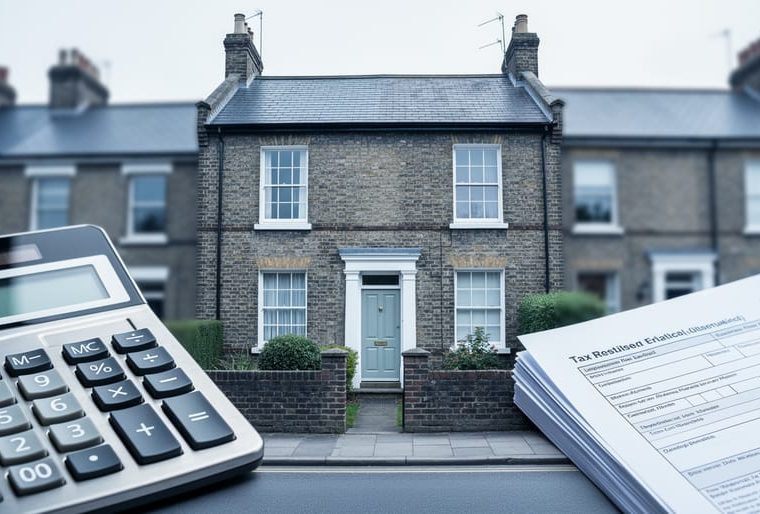
Capital Gains Tax (CGT) on UK property sales is a levy you owe on the profit made when selling a property that isn’t your primary residence. If you’ve invested in a buy-to-let, renovated a second home, or sold an inherited property, understanding these rules is essential to avoid unexpected tax bills and ensure you’re maximizing legitimate reliefs.
For homeowners and design enthusiasts who’ve poured heart and budget into perfecting a design aesthetic, the financial reality of selling can feel distant until you’re faced with a 60-day reporting deadline and rates of up to 24% on your gains. The stakes are high. Whether you’ve flipped a period terrace, downsized from a family home, or are managing property inherited from relatives, the CGT landscape in 2026 requires careful attention.
This guide walks you through what triggers CGT on property, how the calculation works in practice, which exemptions and reliefs could reduce your liability, and the specific rates and deadlines that apply. You’ll find clarity on Private Residence Relief, the nuances of mixed-use properties, and how improvements versus repairs influence your taxable gain. Our international team has distilled complex HMRC guidance into accessible steps so you can approach your property sale with confidence, armed with the knowledge to plan ahead and make informed decisions about your next move when considering capital gains tax when selling a house.
What Capital Gains Tax on Property Sales Means
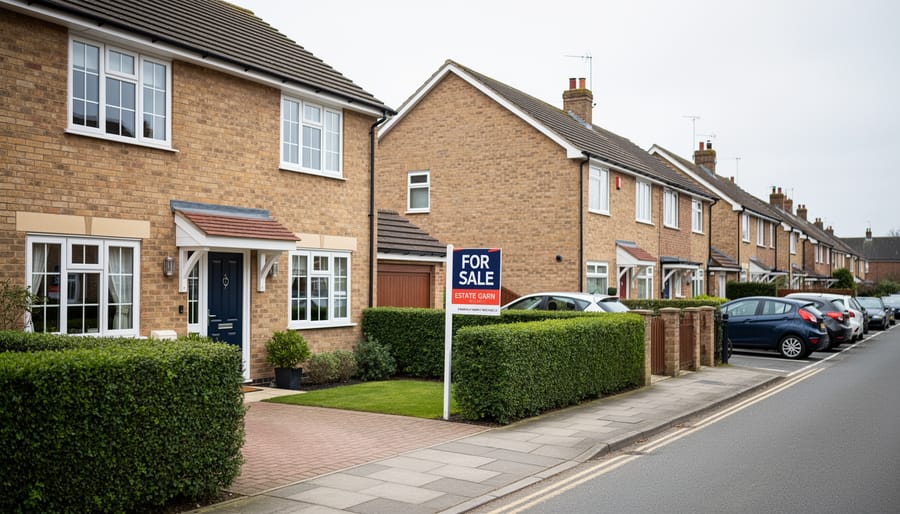
Capital Gains Tax on property sales is exactly what it sounds like: a tax on the profit you make when you sell a property for more than you paid for it. Think of it as HMRC taking a slice of your windfall when you’ve successfully navigated the property market and come out ahead.
The basic principle is straightforward. You’re not taxed on the full sale price of your property, only on the gain, which is the difference between what you paid and what you received when you sold. If you bought a flat in 2018 for £250,000 and sold it in 2026 for £320,000, your capital gain is £70,000. That gain becomes subject to tax, though various reliefs and exemptions can reduce or eliminate what you actually owe.
Here are the key terms you’ll encounter:
- Capital gain
- The profit you make from selling an asset, in this case, property, calculated as the difference between the sale price and the original purchase price plus costs.
- Disposal
- The official term for any sale, gift, transfer, or exchange of property that triggers a potential CGT liability.
- Acquisition cost
- What you originally paid for the property, including purchase price, stamp duty, legal fees, and estate agent costs when buying.
- Allowable expenses
- Costs you can deduct from your gain, including significant improvements (like an extension or new kitchen), legal fees when selling, and estate agent commissions.
CGT applies when you dispose of property that isn’t your main home. Your principal private residence typically benefits from full relief, meaning no tax liability when you sell. But second homes, buy-to-let investments, inherited properties you don’t live in, and commercial premises all fall within the CGT net.
The tax catches many homeowners by surprise, particularly those who’ve renovated investment properties or holiday homes. You might have transformed a rundown cottage into a design showcase, but if it wasn’t your primary residence throughout ownership, HMRC expects its share of that appreciation when you sell.
How UK Property Sale CGT Works
Calculating Your Capital Gain
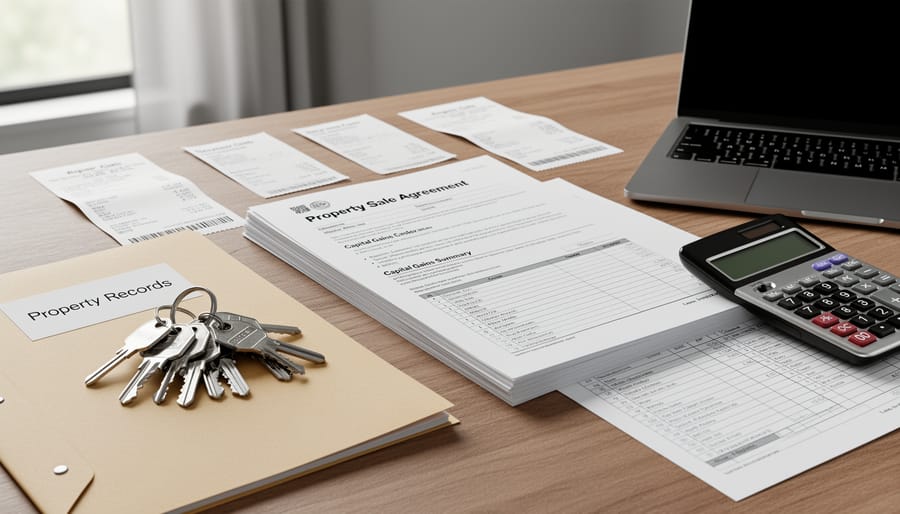
The core calculation starts with your sale proceeds minus the original purchase price. Say you bought a property for £250,000 and sold it for £400,000, your initial gain sits at £150,000. But that’s not the taxable figure yet.
You can deduct qualifying costs that increased the property’s value. Renovation work counts: a loft conversion, kitchen extension, or structural improvements that added permanent value to the home. Redecorating and routine maintenance don’t qualify, so fresh paint or fixing a leaky tap won’t reduce your bill. Keep receipts for everything substantial, these records justify your deductions if HMRC asks.
Legal fees, surveyor costs, estate agent commissions and stamp duty from both purchase and sale also come off the gain. If you spent £15,000 on solicitors, agents and surveys across both transactions, and invested £40,000 in a side extension and new bathroom, you’d subtract £55,000 from that £150,000 gain, leaving £95,000 as your taxable amount.
Incidental costs of acquisition and disposal count too: valuation fees, advertising expenses, even professional costs for establishing your right to the asset. The key is that expenses must be wholly and exclusively incurred for the acquisition, improvement or disposal of the property. Grey-area costs rarely survive scrutiny, so stick to clear-cut expenditure with documentation.
Reporting and Payment Timeline

Once you complete the sale of a UK property that’s liable for CGT, the clock starts ticking immediately. You must report the sale and pay any tax due within 60 days of the completion date, not the exchange date, but the day ownership legally transfers to the buyer. This tight window catches many sellers off guard, particularly those accustomed to the traditional January self-assessment deadline.
The reporting happens through HMRC’s dedicated UK property reporting service, a separate online system from your usual tax return. You’ll need to create a Government Gateway account if you don’t already have one, then navigate to the property disposal section. The system walks you through the calculation, asking for the sale price, purchase costs, improvement expenses, and any relief you’re claiming. Private residence relief eligibility can be checked during this process if you lived in the property as your main home.
Payment is due at the same time as your report. The service calculates your liability and provides immediate payment options, including bank transfer and debit card. If you later discover an error or qualify for additional relief, you can amend the return through your self-assessment for that tax year, potentially claiming a refund.
Miss the 60-day deadline and HMRC can impose penalties starting at £100, with additional charges accumulating if the delay continues. Interest accrues on unpaid tax from day 61. For homeowners who’ve poured energy into renovating a property, this compressed timeline means gathering receipts and documentation well before completion, not scrambling afterward.
Types of Property and CGT Treatment

Not every property faces the same Capital Gains Tax treatment when you sell. The UK tax system draws clear distinctions between property types, and understanding which category applies to your situation determines whether you owe tax, how much you might pay, and which reliefs you can claim.
Your main home, officially termed your principal private residence, receives the most generous treatment. If you’ve lived in a property as your only or main residence throughout your ownership, you typically won’t pay CGT when you sell. This exemption recognizes that most people aren’t speculating when they buy and sell the home where they actually live. The protection extends to grounds up to half a hectare, including gardens and grounds that serve the residence.
Second homes operate under different rules entirely. That cottage by the coast or the flat in the city you use occasionally counts as a second property, and any profit you make on sale becomes subject to CGT. You can’t claim the full principal residence relief, though you may qualify for partial relief if you’ve ever lived there as your main home during your ownership period. The distinction matters significantly: a £200,000 gain on your main home escapes tax, while the same gain on a second home could cost you £56,000 if you’re a higher-rate taxpayer.
Buy-to-let properties always trigger a CGT calculation when sold. These investment properties never qualify for principal residence relief because you’ve never occupied them as your home. You can deduct costs like estate agent fees, legal expenses, and qualifying improvement works, the line between repair and improvement matters here, and understanding design differences like modern vs contemporary styles can help you articulate which renovations genuinely enhanced the property’s value. Routine maintenance doesn’t count, but installing a new kitchen or converting a loft does.
Inherited property presents a more nuanced picture. You don’t pay CGT on receiving the inheritance itself, but when you eventually sell, you’re taxed on any gain from the property’s value at the date of death to your sale price. If you moved into an inherited home as your main residence before selling, you might claim principal residence relief for that period.
Commercial property, offices, shops, industrial units, follows standard CGT rules but qualifies for Business Asset Disposal Relief in some circumstances, potentially reducing your rate to 10% on qualifying gains up to a lifetime limit. The property must have been used in your business, not merely let to generate income.
Exemptions and Reliefs Available
The most valuable tool in reducing your CGT bill is Principal Private Residence Relief, which eliminates tax entirely on properties that have been your main home throughout ownership. If you’ve lived in the house for the full period between purchase and sale, you pay nothing, even if its value has soared. The relief extends to up to half a hectare of garden, so your landscaped grounds are covered too. You’ll qualify for this relief even if you’ve undertaken a significant living space redesign during ownership, as long as the property remained your only or main residence.
Partial relief applies when a property has been your main home for only part of the ownership period. You’ll receive full relief for the years you lived there, plus an automatic final nine months of ownership regardless of whether you occupied it. This grace period helps homeowners who’ve already moved into a new residence while marketing their previous home. If you lived in the property for five years of a ten-year ownership period, for instance, you’d receive relief on half the gain plus the final nine months.
The annual CGT allowance, £3,000 for the 2026-27 tax year, lets you realize gains up to this threshold without paying tax. Married couples and civil partners each receive their own allowance, effectively doubling the tax-free amount to £6,000 when selling jointly owned property. This allowance applies across all capital gains in a tax year, not just property.
Several other reliefs can reduce your liability:
– Lettings ReliefPreviously available when renting out part of your main home, this relief was abolished in 2020 and now applies only to properties where the owner was in shared occupancy with tenants
– Improvement CostsExpenses for extensions, conversions and substantial renovations can be deducted from the gain, reducing the taxable amount
– Legal and Professional FeesEstate agent fees, solicitor costs, and surveyor charges incurred during both purchase and sale are allowable deductions
– Transfer Between SpousesGifts or transfers to a spouse or civil partner carry no immediate CGT liability, with the recipient adopting the original acquisition cost
Properties inherited after someone’s death receive a “stepped-up” basis, meaning the acquisition cost for CGT purposes is the market value at the date of death rather than what the deceased originally paid. This often eliminates or substantially reduces gains when beneficiaries later sell.
CGT Rates and Thresholds for 2026
For 2026, understanding the specific numbers matters when planning your property sale. The annual CGT allowance sits at £3,000 for individuals (£1,500 for trusts), meaning you won’t pay tax on gains below this threshold. Once your profit exceeds this amount, the rates vary depending on your income tax band and property type.
For residential property, basic-rate taxpayers pay 18% on gains, while higher and additional-rate taxpayers face 24%. If your gain pushes you from the basic rate into the higher rate band, you’ll pay 18% on the portion that falls within the basic rate allowance and 24% on the remainder. Non-residential property attracts lower rates: 10% for basic-rate taxpayers and 20% for those in higher brackets.
Your total income for the tax year determines which rate applies. This includes your salary, pension, rental income, and any other taxable earnings alongside the capital gain itself. If you’re close to the higher-rate threshold (£50,270 for 2026), a large property gain could push you into the higher bracket, substantially increasing your tax bill.
The timing of your sale can influence which tax year’s rates and allowances apply. Some sellers coordinate transactions to use multiple years’ allowances or to align with years where their other income is lower, keeping them in the basic-rate band. Married couples and civil partners can transfer assets between themselves tax-free, potentially using both annual allowances and both basic-rate bands to minimize the overall tax burden on a sale.
When CGT Rules Apply to Your Property Sale
CGT rules kick in whenever you sell a property that doesn’t qualify for full Principal Private Residence Relief, and the scenarios are more common than you might expect.
If you’ve renovated a period property or transformed a dated house into a showcase home, you may assume the work you’ve put in protects you from CGT. It doesn’t. The critical factor is whether that property was your main residence for the entire period of ownership. If you bought a fixer-upper, spent six months bringing it up to standard, then sold it before moving in, the entire gain is taxable. Even if you created a stunning contemporary living room and completely reimagined the space, HMRC treats it as an investment flip rather than a home sale.
The same applies if you’ve lived in the property but not throughout your ownership. Perhaps you inherited a family home, moved in for two years while deciding what to do, then sold it. The period before you took up residence and after you moved out both fall outside PPR relief, creating a proportional CGT liability based on how long you actually lived there versus the total ownership period.
Holiday homes present a clear-cut case. That coastal cottage or countryside retreat you’ve lovingly furnished and use several times a year doesn’t qualify as your main residence, so the full gain on sale is taxable. You can’t claim PPR relief on a second property unless you formally elected it as your main home within two years of acquiring it, and even then you can only have one qualifying residence at a time.
Buy-to-let disposals always trigger CGT calculations. Whether you’ve held the property for three years or thirty, any profit above your annual exempt amount faces the residential property CGT rate. This applies even if you originally bought it as your home and later converted it to a rental. The letting period doesn’t attract PPR relief unless you meet the strict criteria for lettings relief, which requires you to have lived in the property as your main residence at some point while also letting part of it out.
Common Questions About UK Property CGT
Do married couples get any special CGT treatment when selling property?
Yes. Married couples and civil partners can transfer property between themselves without triggering CGT, and they each have their own annual exempt amount. If you’re selling a property jointly, you can potentially use both allowances to reduce the overall tax bill.
What happens if I gift a property to a family member?
Gifts are treated as disposals at market value for CGT purposes, meaning you’re deemed to have sold at the property’s current worth even though no money changed hands. You may owe tax on the gain from your original purchase price to the market value at the time of the gift, though some reliefs may apply for gifts to spouses.
Can I deduct the cost of home improvements from my capital gain?
Yes, but only enhancement expenditure that adds lasting value to the property. This includes extensions, loft conversions, or structural improvements, but not routine maintenance, repairs, or decorative updates like repainting. Even substantial renovation work following styling tips typically counts as maintenance unless it fundamentally alters the property’s character or adds square footage.
What are the penalties for missing the 60-day reporting deadline?
HMRC charges penalties for late reporting and payment, starting at a minimum penalty even if you owe no tax. The penalty increases the longer you delay, and interest accrues on any unpaid tax from the original deadline. It’s worth filing on time even if you need to estimate figures and amend later.
Do I need to report the sale if my gain is below the annual exempt amount?
Generally no, if your total gains for the tax year are below the annual exempt amount and you have no other reason to complete a Self Assessment return. However, if the property wasn’t your main residence throughout ownership, it’s often safer to report it anyway to establish a clear record with HMRC.
These scenarios come up repeatedly when homeowners navigate property sales, particularly for those who’ve invested in design-forward renovations or held multiple properties over time. The rules around improvements can be especially relevant for the design-conscious community, where the line between enhancement and maintenance isn’t always obvious. If your situation involves complex ownership structures, significant gains, or uncertainty about which relief applies, consulting a tax advisor before completing the sale gives you time to structure the transaction advantageously rather than discovering an unexpected liability after the fact.
Understanding Capital Gains Tax rules doesn’t just protect you from unexpected bills, it empowers you to make smarter decisions about your property journey. Whether you’re selling a beautifully renovated home, letting go of an investment property, or passing on an inherited estate, knowing how CGT applies to your specific situation means you can plan effectively and maximize what you keep from the sale.
The nuances matter here. Timing your sale, documenting improvement costs, understanding which reliefs you qualify for, and meeting reporting deadlines can collectively save thousands of pounds. For those of you who’ve poured creativity and resources into transforming properties, recognizing how renovations affect your tax position turns design investment into financial strategy.
Don’t leave CGT calculations to chance or the last minute. The 60-day reporting window arrives quickly after completion, and mistakes can trigger penalties that erode your proceeds. If your situation involves multiple properties, partial ownership, complex relief claims, or substantial gains, professional tax advice isn’t an indulgence, it’s a practical necessity that typically pays for itself.
The same thoughtfulness you bring to selecting finishes and planning layouts applies equally to managing the financial side of property ownership. Smart property decisions combine aesthetic vision with fiscal clarity, and understanding CGT rules forms an essential part of that equation.