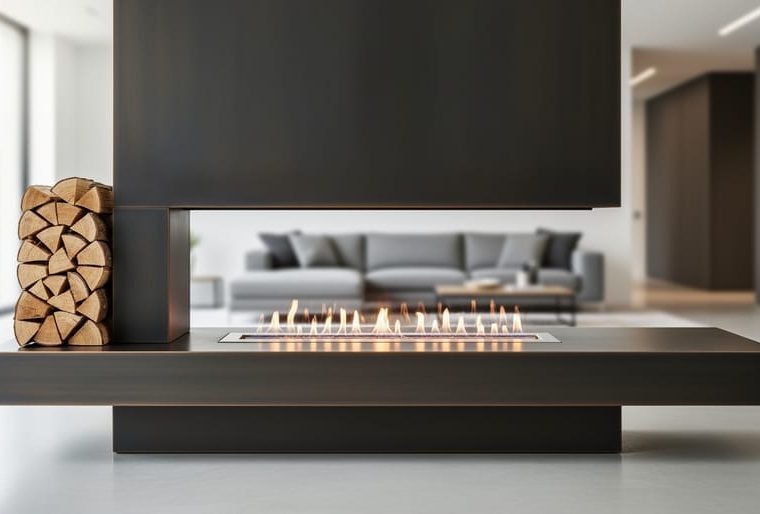
Contemporary design touches for a fireplace focal point blend minimalist forms, curated materials, and intentional negative space to create a center of visual gravity without ornamental excess. These design strategies transform the traditional hearth into a sleek architectural statement that anchors modern living spaces while maintaining warmth and function. Whether you’re renovating an existing fireplace or planning new construction, consulting resources like masonchimneyrepair.com ensures your design vision meets safety codes and venting requirements before you commit to finishes, helping you understand the contemporary design essentials that elevate your space.
The fireplace has evolved from a purely functional necessity to a deliberate design choice that defines room character. In 2026, homeowners are moving away from heavy mantels and decorative surrounds toward clean-lined enclosures, floating hearths, and integrated media walls. Proper structural planning matters here.
This article walks you through the core principles of contemporary fireplace design, the specific elements that create visual impact, and the practical steps to bring these touches into your home. You’ll discover which materials work best for different aesthetics, how to balance scale and proportion in your space, and what installation considerations shape your final design. From linear gas units framed in blackened steel to double-sided fireplaces that divide open-plan spaces, contemporary design offers flexibility for nearly any architectural context.
Our international design team has observed projects across continents, and the consensus is clear: restraint and precision define the contemporary fireplace. Fewer elements, executed flawlessly, outperform busy compositions every time.
What Contemporary Fireplace Design Means in 2026
Contemporary fireplace design in 2026 centers on restraint, authenticity, and intentional material choices that let the fireplace make a statement without shouting. Unlike traditional fireplaces with ornate mantels and decorative moldings, contemporary approaches strip away embellishment to reveal clean geometry and honest materials. This isn’t the same as modern design, the contemporary vs modern distinction matters here. While modern design references specific mid-century aesthetics with defined rules, contemporary design evolves with current sensibilities, incorporating today’s technologies and materials while maintaining simplicity as its foundation.
At its core, contemporary fireplace design operates on three principles: edited visual presence, material innovation, and spatial awareness. The fireplace becomes a focal point through contrast rather than decoration, whether that’s a dramatic concrete surround against white walls or a sleek linear firebox that stretches horizontally instead of reaching upward. Material choices lean toward the tactile and genuine, raw steel, honed marble, textured stone, natural wood, each selected for inherent character rather than applied ornament.
- Focal Point
- The dominant visual element in a room that draws attention and anchors the surrounding design. In contemporary spaces, the fireplace achieves this through material presence and proportion rather than decorative detail.
- Surround
- The material framework enclosing the firebox, which in contemporary design often extends floor-to-ceiling to create dramatic vertical impact.
- Mantel-less Design
- The intentional elimination of traditional mantel shelves, allowing the fireplace surround to remain uninterrupted and emphasizing clean vertical or horizontal lines.
- Linear Firebox
- A wide, shallow firebox format that creates horizontal visual movement, contrasting with traditional vertical fireplace proportions.
- Material Palette
- The deliberate selection of complementary textures and finishes, typically limited to two or three materials that create interest through contrast.
- Negative Space
- Intentional emptiness surrounding the fireplace that prevents visual clutter and allows the eye to appreciate the fireplace’s form and materiality.
The result feels current without chasing trends. A contemporary fireplace integrates seamlessly with how people actually live today, accommodating wall-mounted televisions, open floor plans, and the desire for spaces that feel both sophisticated and genuinely comfortable. The design language speaks to now without dating itself, which is precisely what distinguishes contemporary thinking from historical reproduction or rigid modernist doctrine.
How Contemporary Fireplace Design Works
The Role of Negative Space
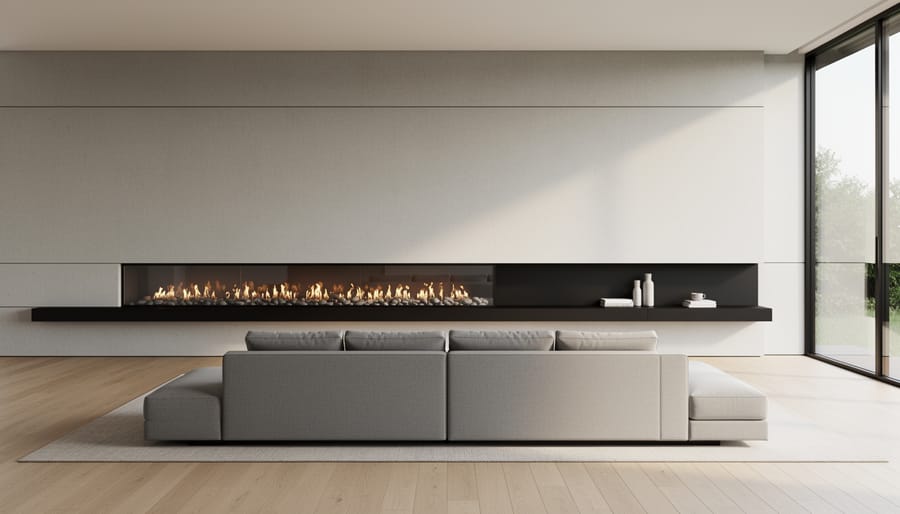
Negative space, the deliberate absence of decoration or structure, is what gives a contemporary fireplace room to breathe and command attention. Rather than crowding the hearth with accessories, artwork, or built-ins, contemporary design creates visual weight through restraint. A single floating mantel against an unadorned concrete surround speaks louder than a cluttered shelf precisely because the emptiness directs your eye to what matters: the fireplace itself and the quality of its materials.
This breathing room works on a functional level too. Leaving walls adjacent to the fireplace uncluttered establishes clear sight lines from multiple angles in open-concept spaces. When you walk into a room, your eye lands immediately on the fireplace rather than scanning competing focal points. The negative space also amplifies texture, a ribbed tile surround or hammered metal panel reveals its full character when surrounded by smooth, uninterrupted wall rather than competing patterns.
Scale plays into this principle. Contemporary designers often extend a fireplace surround floor to ceiling without filling that vertical expanse, creating drama through proportion and simplicity rather than ornamentation. The empty space becomes part of the design statement, not something requiring correction.
Material Contrast and Texture
Contemporary fireplaces gain dimensional depth through deliberate material pairings that create tactile and visual contrast. A smooth concrete surround paired with rough-hewn stone or reclaimed wood immediately draws the eye, establishing layers of interest within the clean framework contemporary design demands.
The temperature of materials matters as much as their texture. Cool grey limestone or honed marble offsets the warmth of walnut floating shelves or brass fireplace screens. This warm-cool dialogue prevents the stark minimalism of contemporary spaces from feeling clinical while maintaining the style’s essential restraint.
Texture variation works best when confined to two or three distinct surfaces rather than scattered across multiple elements. A fireplace might combine matte porcelain tile with brushed steel and a single textured accent wall behind the firebox. Each material claims its territory without competing, creating rhythm through repetition rather than chaos through variety.
The most effective contemporary designs let texture speak through light interaction. Flamed granite catches shadows differently than polished concrete. A limestone surround reveals subtle fossilization under directional lighting. These discoveries unfold gradually, rewarding closer inspection without announcing themselves from across the room.
Essential Contemporary Fireplace Elements
Material Choices That Define Contemporary Style
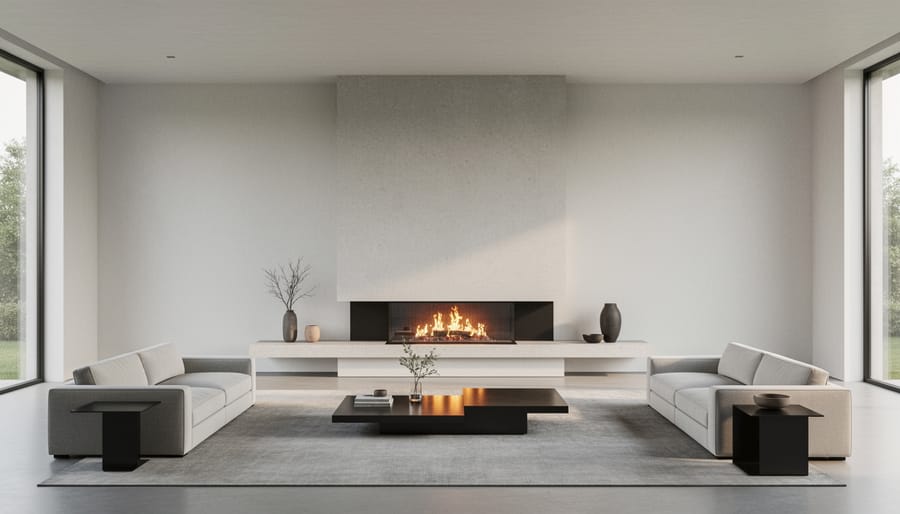
Material choice establishes the visual language of contemporary fireplace design more powerfully than any other single decision. The surfaces you select communicate texture, warmth, and sophistication while anchoring the aesthetic direction of the entire space.
Concrete has emerged as the contemporary material par excellence for fireplace surrounds. Poured-in-place or precast panels deliver seamless expanses that read as architectural statements rather than decorative appliqués. The surface can be smooth and polished for a refined look, or left with subtle formwork texture that catches light throughout the day. Tonal variations within concrete, from warm grays to charcoal to nearly white, allow calibration to your room’s palette without abandoning the material’s inherent character.
Natural stone brings organic drama when cut into large-format slabs. Book-matched marble or quartzite creates mirror-image veining patterns that frame the firebox with geological artistry. Unlike traditional stacked stone, contemporary applications favor minimal grout lines and substantial pieces that showcase the stone’s natural beauty rather than fragmenting it into busy patterns.
Metal cladding in blackened steel, brushed stainless, or raw brass wraps the fireplace in industrial elegance. These surfaces age beautifully, developing patinas that deepen their connection to living room focal points over time. Porcelain tile in oversized formats mimics concrete or stone while offering practical advantages in heat resistance and maintenance.
Mantel Configurations and Alternatives
Contemporary fireplace design has largely moved away from the thick, ornate mantels that defined traditional styles. Today’s configurations favor restraint and architectural integration.
Floating Shelves as Mantels
A single floating shelf in wood, stone, or metal provides a minimalist display surface without visual bulk. The key is proportion, typically 6 to 8 inches deep and positioned to feel like an extension of the wall plane rather than an applied element. The clean horizontal line creates pause without interrupting the fireplace’s vertical drama.
Integrated Niches
Recessed storage built into the fireplace wall serves both function and form. These flush alcoves eliminate protrusion while offering display space that feels intentional rather than decorative. When finished in the same material as the surround, they read as carved voids that enhance the monolithic quality contemporary design prizes.
Mantel-Less Designs
Many contemporary fireplaces skip the mantel entirely, allowing the material to run uninterrupted from floor to ceiling. This approach works particularly well with dramatic stone or concrete, where the surface itself commands attention. The absence of a shelf forces the eye to appreciate texture, pattern, and scale without distraction.
Fireplace Scale and Proportion
Scale shapes first impressions. Contemporary fireplace design leverages dimension to command attention without overpowering the room, treating height, width and placement as active elements rather than fixed constraints. Floor-to-ceiling surrounds create vertical drama that draws the eye upward, making standard-height rooms feel taller while establishing the fireplace as an architectural spine. Horizontal linear fireplaces spanning six to eight feet anchor wide walls and complement low-profile furniture, their stretched proportions echoing the clean lines throughout contemporary spaces.
Placement determines visual weight. A fireplace centered on the main sightline from the entry commands immediate attention, while off-center positioning creates asymmetrical interest that pairs well with adjacent built-ins or media zones. The relationship between fireplace size and wall expanse matters, undersized units disappear against expansive surfaces, while oversized installations crowd the composition. Contemporary proportion favors generous scale balanced by restraint: a substantial surround rendered in a single material carries more impact than a small fireplace surrounded by competing trim.
These principles extend beyond indoor installations; many homeowners apply similar thinking to outdoor fire pit ideas where scale relative to patio dimensions and sightlines follows the same logic of intentional drama within balanced context.
Where and How Contemporary Fireplace Design Is Used
Living Room Focal Points
In open-concept living areas, a contemporary fireplace serves as the visual anchor that defines zones without walls. The clean lines and substantial presence of a floor-to-ceiling stone or concrete surround create a vertical element that draws the eye upward, establishing hierarchy in rooms where everything flows together. This vertical emphasis becomes especially valuable in spaces with soaring ceilings, where the fireplace prevents the room from feeling untethered.
When positioned opposite or adjacent to media walls, contemporary fireplaces provide counterbalance, offsetting the technology’s horizontal spread with grounded materiality. A matte black steel surround or textured stone face offers tactile weight that complements screens without competing for attention. The key lies in treating both elements as intentional design features rather than afterthoughts, creating a conversation between warmth and entertainment that feels curated rather than conflicted.
Bedroom and Private Space Applications
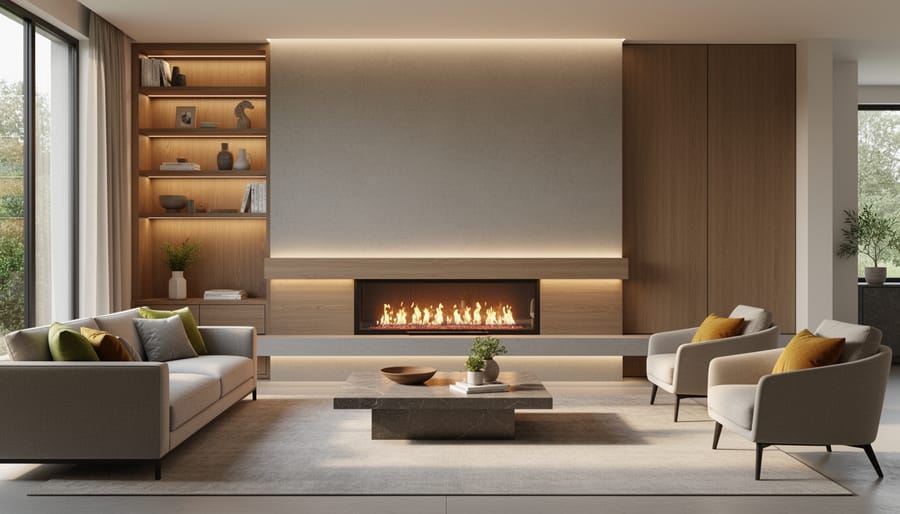
Bedroom fireplaces demand restraint. The contemporary approach here prioritizes subtlety over drama, creating ambient warmth without competing for visual attention in spaces designed for rest.
Linear gas fireplaces work particularly well in primary bedrooms. A 36-inch horizontal unit mounted at eye level when seated creates gentle movement and warmth without the scale that would overwhelm intimate quarters. Frameless installations that sit flush with the wall, perhaps clad in smooth limestone or honed marble, maintain the clean backdrop essential to restful environments.
The mantel question often resolves itself in bedrooms. A simple floating shelf in warm walnut, positioned to hold a single sculptural object or seasonal greenery, provides function without fuss. Many designers skip the mantel entirely, letting the fireplace opening become a glowing aperture in an otherwise uninterrupted wall plane.
In home offices and private sitting areas, vertical orientation works where horizontal would dominate. A slender floor-to-ceiling fireplace column, perhaps 18 inches wide, draws the eye upward while occupying minimal floor area.
Outdoor and Transitional Spaces
Contemporary fireplace design extends beyond interior walls, creating dramatic focal points in outdoor living areas where the contrast between natural elements and refined design becomes most striking. In covered patios and courtyards, contemporary fireplaces often feature weather-resistant materials like stacked stone, poured concrete, or metal panels that complement outdoor architecture while withstanding the elements.
The approach differs from indoor applications in scale and integration. Outdoor contemporary fireplaces typically embrace larger proportions and bolder materials, anchoring lounge seating areas or defining outdoor dining zones. Linear gas fireplaces set into smooth stucco walls create clean horizontal lines that mirror the landscape, while freestanding steel fire features serve as sculptural elements that divide space without blocking sightlines.
In transitional zones, covered terraces or three-season rooms, contemporary fireplace design bridges inside and outside. These installations often continue interior materials outdoors, using the same stone cladding or tile to visually connect spaces. The result transforms outdoor areas into genuine living rooms, extending the home’s contemporary aesthetic into the landscape year-round.
Implementing Contemporary Touches: From Concept to Completion
Successful implementation starts with an honest assessment of your existing fireplace and surrounding architecture. Before selecting materials or calling contractors, photograph your space from multiple angles and note structural limitations, load-bearing walls, existing gas lines, chimney configurations, that will shape your options. This reconnaissance phase prevents costly mid-project surprises and helps you communicate clearly with professionals.
Next, assemble your material samples and create a physical mood board. Digital inspiration is valuable, but seeing actual stone, tile, and metal finishes in your lighting conditions reveals how they’ll truly appear. Visit showrooms with photos of your space, and don’t hesitate to take samples home for overnight evaluation. Contemporary design thrives on material honesty, so choose finishes you genuinely love rather than what seems trendy.
When selecting contractors, prioritize those experienced with contemporary aesthetics rather than just fireplace installation. The difference shows in details like perfectly aligned tile grout lines, seamless mantel integration, and proportions that honor the architecture of contemporary homes. Request photos of previous contemporary projects and ask specific questions about their approach to minimalist detailing.
Budget for quality where it matters most: the primary surround material and professional installation. Attempting DIY on a focal-point fireplace rarely yields the clean precision contemporary design demands. However, you can economize on adjacent elements, paint, simple floating shelves, or updating fireplace accessories, while investing in expert execution of the main architectural feature.
Finally, plan the timeline around your household’s heating needs and expect the project to take longer than quoted. Specialty materials often require extended lead times, and achieving flawless contemporary finishes can’t be rushed. The result, though, transforms your space with an authority that justifies the patience and investment.
Common Questions About Contemporary Fireplace Design
Can you update a traditional brick fireplace with contemporary touches? Absolutely. Most existing fireplaces can be retrofitted by cladding over the original surround with materials like large-format porcelain, concrete panels, or natural stone. The key is working with the existing firebox dimensions while updating everything around it. You’ll likely need a mason or tile contractor experienced with fireplace work to ensure proper clearances and ventilation remain intact.
What does a contemporary fireplace redesign typically cost?
A cosmetic surround update using porcelain or stone tile ranges from $2,000 to $8,000 depending on materials and labor. Full renovations involving structural changes, new firebox installations, or custom metalwork can reach $15,000 to $30,000 or more.
How do you maintain contemporary fireplace finishes?
Most contemporary materials are chosen for durability. Sealed concrete and stone need occasional resealing every few years, while porcelain and metal surfaces require only regular dusting and occasional cleaning with appropriate non-abrasive products.
Can a traditional home incorporate a contemporary fireplace without clashing?
Yes, when executed thoughtfully. The contrast between traditional architecture and a sleek contemporary fireplace often creates compelling visual tension rather than discord, particularly in updated interiors that blend periods.
Where should the TV go in relation to a contemporary fireplace?
Designers generally recommend placing the TV on an adjacent wall to preserve the fireplace as the true focal point. If mounting above is unavoidable, keep the fireplace surround streamlined and consider a Frame TV or hidden display to minimize competition.
Budget concerns don’t preclude contemporary style. Start with paint if you’re working with existing masonry, using a high-heat paint in charcoal or white to modernize the look immediately. Swapping a traditional mantel for a floating wood shelf costs under $300 in materials. Even small shifts in proportion and finish move the needle toward contemporary without requiring a complete gut job.
Contemporary design touches elevate your fireplace from a functional heating element to the defining feature of your space. The clean lines, thoughtful material selections, and intentional proportions we’ve explored aren’t rigid rules but principles that adapt to your unique vision and architectural context.
What makes contemporary fireplace design enduring is its foundation in restraint and quality rather than passing trends. Whether you’re drawn to the warmth of natural wood accents, the industrial edge of exposed concrete, or the sleek sophistication of porcelain cladding, these elements work because they respect the fireplace’s inherent presence while enhancing it through careful curation.
Your fireplace transformation doesn’t require starting from scratch. Even small interventions, updating the surround material, adjusting mantel proportions, or introducing strategic negative space, can shift the entire room’s character. The key is choosing touches that feel authentic to your aesthetic while embracing the clarity contemporary design offers.
At Pure Design, our international team brings diverse perspectives on contemporary living, and our community events regularly showcase how these principles translate across different cultures and home styles. Your fireplace focal point should tell your story while embodying the timeless appeal of contemporary design.