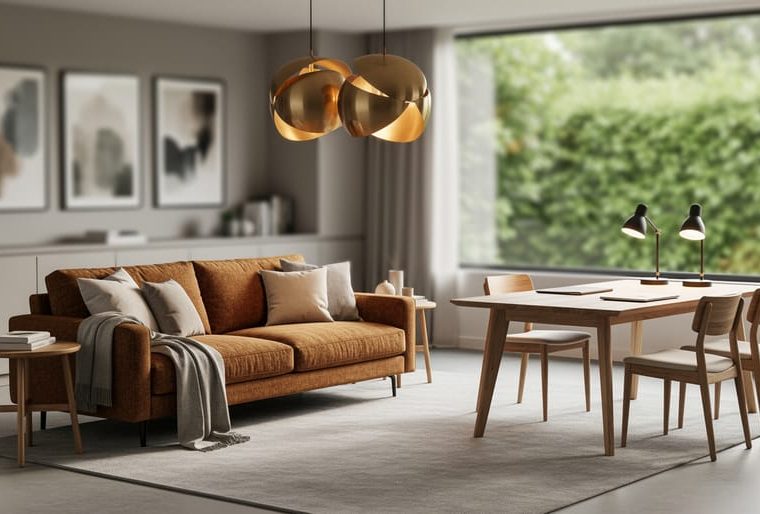
An international creative agency is a team of designers, strategists, writers, and storytellers based in different parts of the world who work together as one studio. Their value is simple: they bring more than one way of seeing a project, and that shows up in everything they make, from a room’s color story to the words and images that describe it.
Think about how differently a Milanese designer and a Scandinavian one approach a living room. One might lean into sculptural lighting and rich material contrast. The other may start with natural light, restraint, and warmth. Put both in the same conversation, and the result is rarely a compromise. It’s something fresher than either would reach alone.
That’s the idea behind the International Creative Team and Content we explore here. These agencies work through shared briefs, open critique, and constant exchange across time zones, turning varied perspectives into a single, cohesive point of view. For design lovers and homeowners, the payoff is practical: more ideas to draw from, more confidence in your choices, and content that feels genuinely worldly rather than one-note.
In this article, we’ll define how these agencies work, look at what global voices bring to interiors, highlight the kind of community events that bring them to life, and offer clear guidance for judging whether an agency is the right fit.
What an International Creative Agency Really Is
More Than a Studio With a Passport Stamp
A studio can have clients in five countries and still think in one accent. Taking on overseas work is a matter of geography. Being international is a matter of authorship.
In a truly international team, the people shaping a project live in different places and carry different habits of seeing. A colorist in one region and a materials specialist in another don’t simply hand off tasks. They question each other’s assumptions, and the idea that survives is better for it. Credit is shared, and so is the thinking.
Some of the best studios are built around exactly this principle, drawing on creative international associates who each bring their own vocabulary of craft and comfort to the table.
The result feels different in a home. Rather than one polished point of view repeated everywhere, you get rooms with depth, where influences sit together comfortably instead of competing.
Where Design Meets Storytelling
A beautifully designed room can still go unnoticed if no one tells its story. That’s where an international creative agency pairs visual design with content creation. Designers shape the space, while writers, photographers and art directors translate it into something people can feel from across the world.
Think of a handwoven textile on a sofa. A photographer captures how morning light catches its texture, and a writer explains where it was made and why its earthy palette works so well in a small living room. Together, the image and the narrative turn a pretty object into an idea you can imagine living with.
This partnership works because each discipline sharpens the other. The visuals set the mood, and the words give it meaning. For readers, that means rooms, products and ideas arrive with context, so inspiration comes with a reason to act on it.
The Power of Many Perspectives in One Creative Team
Regional Design Languages That Travel Well
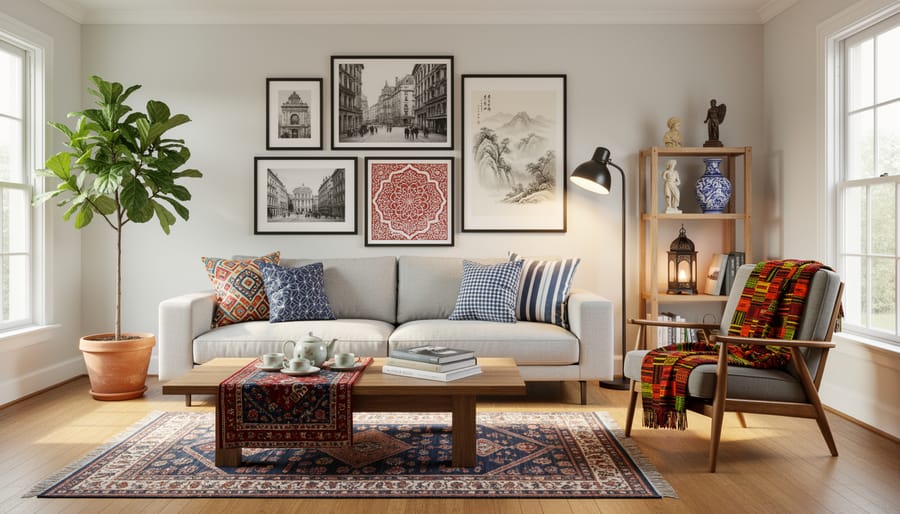
Every region has a way of solving the same questions: how to welcome light, which materials to trust, how to make a room feel good to sit in. The beauty of an international team is that these answers can sit side by side without competing. A single home can borrow a Nordic approach to daylight, a Mediterranean love of texture and a Japanese respect for craft, and still feel like itself.
The key is to borrow a quality, not a costume. Here is a simple way to translate a few traditions into everyday choices.
| Design tradition | Signature qualities | Easy way to bring it home |
|---|---|---|
| Scandinavian | Pale woods, soft daylight, calm restraint | Choose light, sheer window dressings and a single well-made wooden piece |
| Mediterranean | Warm earth tones, handmade surfaces, relaxed hospitality | Add terracotta or ceramic accents and a textured linen throw |
| Japanese | Open space, natural materials, honored craftsmanship | Clear a surface and display one handcrafted object with room around it |
| Latin American | Confident color, pattern, lively layering | Introduce one saturated cushion or textile as a focal point |
Start with one idea per room rather than all four at once. A bedroom might lean on Nordic light and quiet tones, while a dining space takes on Mediterranean warmth. Keep your base palette and materials consistent, and let each influence arrive as an accent. That restraint is what lets global ideas travel well, and stay timeless.
How Local Insight Keeps Global Ideas Grounded
A global idea only becomes a good home when someone local shapes it. A designer who lives in the climate understands how afternoon sun moves across a wall, which timber survives humid summers, and why a deep, shaded veranda matters more than a trendy open facade. That knowledge is what keeps imported inspiration from feeling generic.
Local insight also covers how people actually live: whether shoes come off at the door, how big a family table needs to be, how much storage a daily routine demands. The benefits of climate-responsive design benefits are a good reminder that comfort starts with place, not style.
When a bold idea from abroad meets this practical grounding, inspiration and creativity become something you can genuinely live with.
How International Creative Teams Work Together

Picture a Monday morning that begins in Lisbon, passes through Stockholm by midday and wraps up in Tokyo by evening. That relay is how an international creative team keeps a project moving. Nobody works around the clock, but the work is handed from one place to the next, and it only holds together because of a few simple habits.
It starts with a shared brief. Everyone reads the same document, which explains the room, the mood, the budget and the person who will live there. Then come the moodboards. A photographer in one city and a stylist in another can pin textures, colors and light references to the same board, so ideas get compared long before anything is drawn.
Time zones are treated as a resource rather than an obstacle. Overlapping hours are saved for live conversation, and the rest of the day is for focused, uninterrupted making. A typical project tends to follow a rhythm like this:
- Agree the brief in a single shared document, including the goals, the audience and the practical limits.
- Collect references on a collaborative moodboard, with each member adding notes on why an image matters.
- Develop two or three early concepts independently, so no single viewpoint dominates too soon.
- Hold a live review during the overlapping hours and invite honest comments from every region.
- Refine the strongest direction, folding in the feedback and checking details against local realities.
- Deliver the final work with clear notes, so every contributor can see how their input shaped the result.
What makes this flow work is the culture around it. Feedback is offered early, kindly and specifically, so a comment like “the palette feels cool for a family kitchen” leads to a better idea instead of a bruised ego. Because no one has to defend a half-finished thought, people share them freely.
For readers, the takeaway is practical. Whether you’re planning a renovation with a partner or gathering inspiration from friends abroad, a shared brief, a common board and regular, generous check-ins will carry your ideas from a scattered pile of images to a finished page, or a finished room.
Content That Inspires: From Idea to Inspiring Page
Every page homeowners love begins as a loose idea: a color that stuck in someone’s mind on a trip, a way of tucking a shelf into an awkward corner, a material that felt right in the hand. An international creative team turns those sparks into finished content by passing them between specialists. A writer shapes the story, a stylist builds the scene, a photographer chooses the light, and an editor makes sure the advice holds together. Many of the same editorial writing principles that sharpen a design portfolio also guide this work, keeping each feature clear, purposeful and easy to act on.
What readers see is the mix of formats that grows out of that process. A styled room story shows how colors and textures sit together. A buying guide explains what is worth investing in and what can wait, which is the heart of intelligent buying. A storage feature shows how to keep a home calm and uncluttered without losing its personality.
A global lens makes each of these more useful. A storage trick from a compact city apartment can solve a problem in a family home on the other side of the world, and a buying habit rooted in one culture’s love of craft can change how you shop. Above all, the aim is to encourage your own creative process, so you finish a page with ideas you can adapt rather than a look to copy.
Bringing the Community Together: Events, Talks and Exhibitions
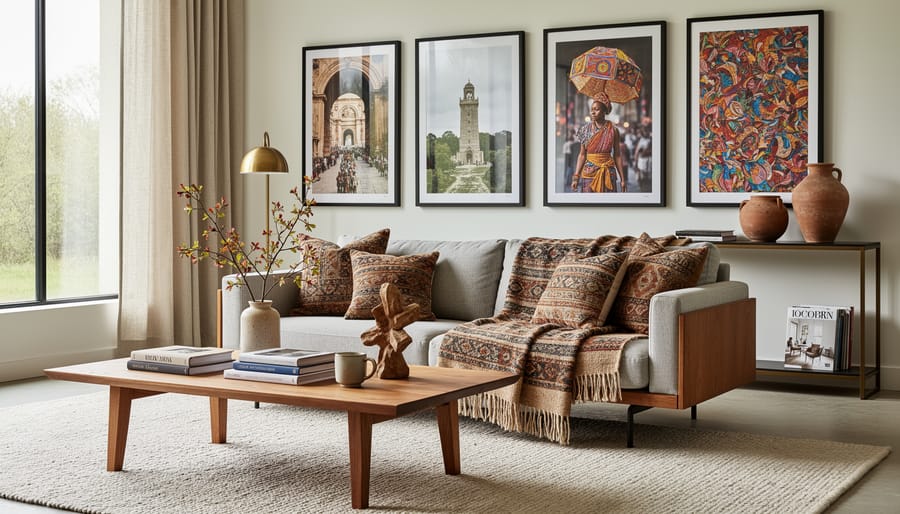
Good design rarely stays on the page. Once ideas have been sketched, styled and photographed, they want to be shared, and that is where gatherings come in. For an international creative agency, events, talks and exhibitions are the moment a global conversation becomes a room full of real people.
Think about what happens when designers, makers and curious homeowners stand in the same space. A ceramicist explains why she leaves a glaze slightly uneven. A visitor from another country notices how a textile echoes a pattern from home. A short talk on natural light sparks twenty minutes of questions in the corridor afterward. These are the unscripted exchanges that no screen quite captures.
Exhibitions add another layer. Seeing materials in person, running a hand over a woven fabric or watching how timber changes in daylight, teaches you things a photograph can only hint at. When work from several regions sits side by side, the differences in approach become visible and the similarities become delightful. You start to see that a love of craft, comfort and thoughtful proportion speaks across borders.
What makes these gatherings special is the feeling they leave behind. People arrive as strangers with a shared curiosity and leave with new contacts, fresh ideas and a sense of belonging to something larger than their own project. That sense of community is the quiet heart of an international creative team, and it turns inspiration from something you read into something you take part in.
What to Look for in an International Creative Agency
A good international creative agency makes its strengths easy to see. Whether you’re a homeowner planning a refresh, a brand looking for a creative partner, or a young designer hoping to learn from the best, a few signals tell you a lot.
Start with portfolio range. Look for work that shifts with the brief instead of repeating one signature look. An agency comfortable with a calm, minimalist apartment and a richly layered family home shows real versatility, and that’s often a sign of genuine curiosity.
Next, consider cultural fluency. The best teams understand why a material, color or layout feels right in one place and different in another. They ask thoughtful questions about how you live, then translate global ideas into something that suits modern living spaces rather than copying a trend wholesale.
Pay attention to communication style, too. Clear, friendly and timely exchanges matter even more across time zones. Look for people who explain their thinking in plain language, welcome your feedback, and tell you what happens next without being asked.
Clarity of process is another strong signal. A confident agency can walk you through its stages, from the first brief and moodboards to reviews and final delivery, so you always know where things stand and what decisions are yours to make.
Finally, look for a sense of craft. You can feel it in the details: well-considered styling, thoughtful photography, writing that has a point of view. When care shows up in the small things, it usually runs through the whole project, and that’s the quality worth choosing.
Creativity grows richer when many voices have a say. That is the quiet strength of an international creative agency: a team spread across regions brings different ideas about light, material, color and comfort, and those ideas settle into one another until a space or a story feels layered and genuinely lived in. The result has depth, warmth and an originality that a single viewpoint rarely reaches on its own.
You don’t need an agency of your own to benefit from this. Start small. Borrow a Scandinavian love of daylight, a Mediterranean instinct for warm texture, or a Japanese respect for uncluttered space, and let them meet in a room that still feels like yours. The best homes gather influences with care and make them personal.
If that kind of curiosity speaks to you, we’d love to have you along. Join the Pure Design community, share what inspires you, and keep exploring the ideas that make a home feel truly your own.