
Creative international associates are design professionals who collaborate across borders to bring diverse perspectives, specialized skills, and round-the-clock productivity to studio projects. This model works because it combines local market insight with global design thinking, allowing firms to serve clients more comprehensively while building resilient, culturally rich teams that mirror the increasingly borderless nature of contemporary design work.
The practice gained momentum as digital collaboration tools matured and studios recognized that talent doesn’t respect geography. A Copenhagen-based publication editor partnering with an illustrator in Buenos Aires and a typographer in Tokyo can produce work that reflects genuinely international sensibilities rather than a single cultural viewpoint imposed globally. The value extends beyond aesthetics. Time zone differences mean projects advance continuously, creative blocks get fresh eyes from colleagues waking up as you wind down, and clients benefit from perspectives shaped by different built environments and design traditions.
Building these teams requires more than hiring across borders. Successful studios establish clear communication protocols, invest in relationship-building that transcends video calls, and create space for cultural exchange that enriches everyone’s practice. The challenges are real: coordinating across time zones demands discipline, legal and financial logistics grow complex, and maintaining cohesive studio culture takes intentional effort when teammates rarely share physical space.
Yet studios who commit to this approach consistently report that international associates bring unexpected solutions, challenge assumptions in productive ways, and open doors to markets and opportunities that would otherwise remain inaccessible. The model works best when viewed not as outsourcing but as genuine collaboration, where every voice contributes equally to the creative vision.
What Creative International Associates Actually Bring to Your Design Practice

Creative international associates are design professionals, writers, photographers, stylists, researchers, illustrators, embedded in markets beyond your home base who contribute specialized work to your studio or publication. They’re not freelancers you hire for one-off projects, but ongoing collaborators who understand your standards and bring perspectives shaped by their local design ecosystems.
The value starts with something you can’t manufacture internally: authentic cultural perspective. An associate in Copenhagen approaches minimalism differently than one in São Paulo, and that difference shows up in their work, the materials they notice, the spatial solutions they consider innovative, the color relationships they find harmonizing. When your team spans continents, you’re not reading about international design trends; you’re hearing about them from people living inside those contexts. This depth transforms coverage from observational to authoritative.
Then there’s the workflow mathematics. A London-based editor can brief a Tokyo researcher before leaving for the day, review drafted content from a Los Angeles writer over morning coffee, and send layout feedback to a Melbourne designer before lunch. This isn’t about squeezing more hours from your team, it’s about maintaining momentum on complex projects without anyone working unsustainable schedules. Handoffs become natural rhythm rather than bottleneck.
Specialized expertise matters more than most studios initially realize. You might need someone fluent in Scandinavian textile traditions, Japanese spatial planning principles, or emerging African design movements. International associates often bring training and professional networks you’d struggle to replicate, a Rome-based architectural photographer who studied under masters of light, a Mumbai trend analyst with direct manufacturer relationships, a Berlin stylist immersed in sustainable materials innovation. Their inspiration creativity emerges from different references and constraints than yours, which means they see solutions you’d miss.
Perhaps most valuable: they make you uncomfortable in productive ways. International associates question assumptions you didn’t know you held about what constitutes good design, appropriate materials, or compelling storytelling. That creative friction, when channeled constructively, keeps your work from calcifying into predictable patterns.
Building Your International Creative Team: What Works in 2026
Identifying the Right Roles for Global Distribution
Not every creative role translates equally well to international distribution. The positions that thrive with global talent share a common trait: they rely more on specialized expertise and autonomous execution than on constant real-time collaboration. Content creators who can dive deep into regional design movements, for instance, often produce richer material when they’re embedded in the markets they cover, a researcher in Copenhagen brings authenticity to Scandinavian design coverage that no amount of internet research can replicate.
Visual designers represent another natural fit, particularly those specializing in layout, illustration, or photography curation. These roles demand creative vision and technical skill but operate within established brand guidelines, making asynchronous collaboration workable. Similarly, trend analysts positioned in different design capitals, Milan, Tokyo, Mexico City, can spot emerging movements months before they reach mainstream design publications, giving your content a competitive edge.
- Content researchers and writers covering specific regions or design traditions
- Visual designers handling layout, graphics, and digital asset creation
- Trend analysts and market researchers embedded in key design cities
- Photography researchers and image curators with local market access
- Social media specialists attuned to platform nuances in different markets
The pattern that emerges: roles requiring deep focus, cultural fluency, or specialized knowledge work brilliantly with international associates. Positions demanding constant iteration with stakeholders or split-second decision-making, like art direction during live shoots, typically need tighter geographic proximity. When covering how contemporary residential architects approach regional contexts, having an associate who actually walks those neighborhoods and speaks with local practitioners yields insights no video call can capture.
The Time Zone Advantage (And How to Actually Use It)
Working with creative international associates across time zones creates a rhythm most design teams never experience: your studio continues creating while you sleep. A designer in Melbourne finalizes layouts during your New York evening, passes them to a content strategist in London for morning review, then your team picks up refined work when you start your day. This isn’t theoretical, it’s how studios produce three magazine issues simultaneously or launch website redesigns in half the usual time.
The key is treating time zones as a workflow feature, not an obstacle. Start by mapping your team’s working hours visually, a simple chart showing when each person is online. Identify your overlap windows: those precious two to three hours when multiple team members are available for real-time decisions. Reserve these for creative direction, feedback sessions, and anything requiring immediate back-and-forth. Everything else becomes asynchronous work with clear handoff protocols.
Effective handoffs are specific, not vague. Instead of “work on the kitchen feature,” your Melbourne designer receives: “Three images need color correction (files linked), hero layout needs 20px more breathing room top margin, and we’re waiting on the countertop manufacturer’s logo.” Include what’s complete, what’s next, what’s blocked, and any relevant context. Record a quick two-minute video walking through your thinking, it prevents misinterpretation and feels more human than text.
The biggest mistake is assuming more time zones automatically mean faster output. Without structure, you get confusion and duplicated effort. The advantage materializes when you deliberately design your workflow around the handoff.
Tools That Make International Teams Function Seamlessly
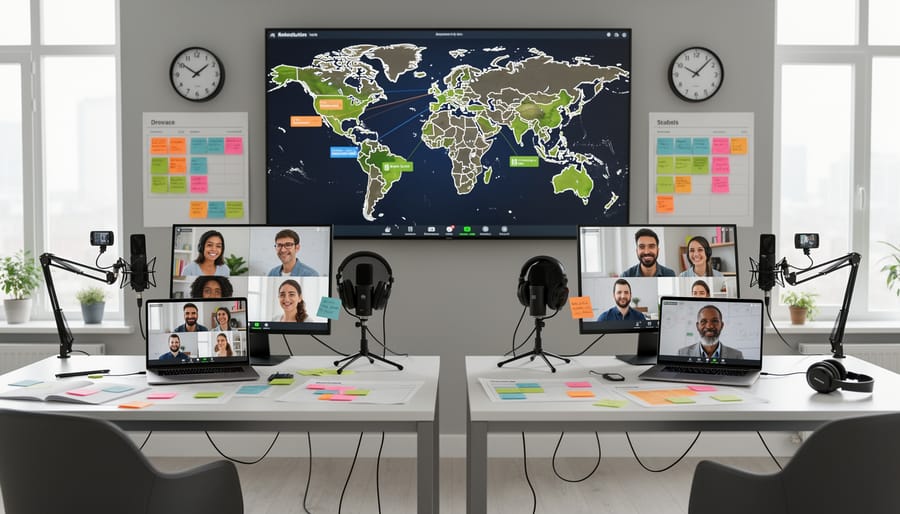
The right tools turn scattered individuals into a cohesive unit. For project management, Notion and ClickUp handle both task tracking and knowledge repositories, critical when you can’t tap someone’s shoulder for context. Visual collaboration lives in Figma for design work and Miro for conceptual mapping, both allowing real-time interaction regardless of location.
Version control systems like Git and Abstract prevent the chaos of multiple designers working on shared files; proper branching and merge reduce conflicts that plague international handoffs. For quick communication, Slack remains standard but Loom videos often communicate nuance better than text threads across language differences.
Consider tools that address cultural context, not just efficiency. displays everyone’s local hours at a glance. Grammarly helps non-native English speakers maintain consistency. WorldTimebuddy simplifies scheduling across six time zones without mental gymnastics.
The key is integration, tools that talk to each other create single sources of truth rather than fragmented information silos that derail international workflows.
Content Quality at Scale: How International Teams Elevate Your Output
Regional Design Insights That Transform Your Coverage
A designer based in Copenhagen will notice Scandinavian minimalism’s subtle shift toward warmer woods months before it trends on Pinterest. Your Jakarta associate sees how tropical climate considerations shape material choices in ways that transform indoor-outdoor flow. These aren’t insights you’ll find in trend reports, they’re lived expertise that changes how you cover design.
When your Tokyo team member explains the cultural reasoning behind compact storage solutions, you’re not just documenting a trend. You’re understanding why those solutions work, what problems they solve, and how they might adapt to other contexts. That depth transforms generic “storage ideas” content into genuine insight about designing modern living spaces for real life.
Regional associates also catch the materials story behind design movements. Your Lisbon contributor knows which Portuguese limestone quarries supply specific designers, understands the cost implications, and can explain why certain finishes work in coastal climates. That’s the difference between surface-level coverage and authoritative storytelling.
The value compounds when these perspectives intersect. Your Mexican associate’s insights on courtyard design might spark your Australian contributor’s thinking on outdoor rooms, creating content that synthesizes global approaches rather than treating them as isolated case studies.
Multilingual Content Strategy Without Losing Your Voice
Creating content for international audiences doesn’t mean watering down what makes your perspective unique. The key is building a flexible framework where your core voice remains recognizable while the delivery adapts to regional context. Start by documenting your non-negotiable editorial writing principles the specific tone markers, recurring themes, and stylistic choices that define your publication. These become your north star when international associates create regionally-adapted content.
Translation alone rarely captures voice. A better approach: provide international team members with annotated examples showing how you’d cover similar topics, then brief them on cultural references that work in specific markets versus those that fall flat. Your associate in Milan understands which Italian design movements resonate locally versus which feel tired. Your Tokyo contributor knows when Western minimalism analogies help or hinder Japanese readers.
Develop tiered guidelines. Core messaging and factual standards stay rigid across all markets. Sentence rhythm, cultural references, and specific examples flex by region. One studio briefs associates with “voice pillars”, three unchanging characteristics like “quietly confident” or “curious without being academic”, then trusts regional judgment on everything else. Review cycles catch drift: have bilingual editors check whether translated pieces would reverse-translate back to something you’d publish. The goal isn’t identical content everywhere but recognizably yours, adapted thoughtfully for readers who think and read differently than your home audience.
The Hidden Challenges (And How to Navigate Them)
Working with creative international associates delivers tremendous value, but pretending the arrangement is frictionless does disservice to both you and your team. Real obstacles exist, and acknowledging them upfront lets you build solutions rather than stumble into preventable problems.
Communication proves more complex than simply translating words. A designer in Tokyo and an editor in Toronto might both speak fluent English yet interpret “modern minimalism” through entirely different cultural lenses. What reads as direct feedback in Amsterdam can feel unnecessarily harsh in Manila. Video calls scheduled for mutual convenience still mean someone’s working during their traditional family dinner hour. You’ll invest more time clarifying expectations, confirming understanding, and building shared visual reference libraries than you would with a team sharing the same studio space.
Cultural work style differences surface in unexpected ways. Some associates will voice disagreement openly in group meetings; others consider public contradiction disrespectful and will only share concerns privately. Deadline urgency varies, what feels like a crisis requiring immediate weekend work in New York might seem like poor planning elsewhere. Hierarchy matters differently across cultures: a junior designer in one country might freely challenge a creative director’s concept, while the same-level associate elsewhere waits for explicit invitation to contribute ideas.
Pros
- Access to diverse design perspectives and regional trend insights unavailable locally
- Extended workflow hours through strategic time zone distribution
- Cost flexibility allowing specialized expertise without full-time local hiring
- Authentic cultural understanding for content targeting international audiences
Cons
- Communication delays and misunderstandings despite shared languages
- Complex payment structures involving currency conversion and international banking fees
- Legal considerations around contractor classification varying by country
- Team cohesion requires deliberate effort without spontaneous in-person interaction
Payment infrastructure gets complicated fast. International wire transfers carry hefty fees and processing delays. Tax documentation requirements differ by country, and you’re responsible for understanding contractor classification laws in each associate’s location, misclassification carries serious penalties. Currency fluctuations affect budgets when you’re paying someone in euros or rupees. Services like Wise or Payoneer solve some friction, but you’ll still need accounting systems that track multiple currencies and ensure compliance across jurisdictions.
Maintaining genuine team cohesion across distances demands intentional effort. The casual hallway conversations that spark collaboration don’t happen virtually unless you create structured space for them. Associates working alone in different time zones can feel isolated from the larger creative vision. Someone always misses the spontaneous brainstorming session or celebration when you operate asynchronously.
The solution isn’t avoiding international teams, the benefits far outweigh these challenges. It’s entering with clear eyes, building systems that address known friction points, and treating cultural navigation as a skill worth developing rather than an inconvenience to tolerate.
Creating Culture and Community Across Borders
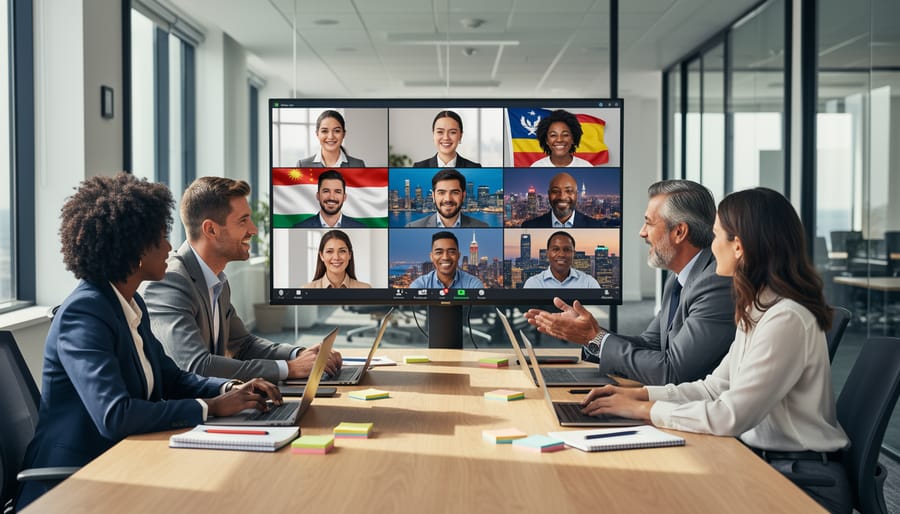
Building a cohesive design team isn’t just about shared Slack channels and project management boards. When your creative associates span continents, intentional culture-building becomes the difference between a collection of freelancers and an actual team.
Start with regular touchpoints that aren’t work-focused. Monthly virtual coffee sessions where team members share their local design discoveries, neighborhood architecture, or cultural events create genuine connection. One publication director schedules quarterly “studio tours” where each associate shows their workspace and creative process on video, simple but remarkably effective at building empathy and understanding.
Shared rituals matter more than you’d expect. A design studio in London established “Friday inspiration threads” where every team member drops one image that inspired them that week, regardless of time zone. No commentary required, just visual dialogue. Another team runs an annual “design swap” where associates send physical materials or objects from their region to a randomly assigned teammate.
Annual in-person meetups justify their cost through accelerated trust-building and creative alignment. Even a three-day gathering where the team works on a real project together, shares meals, and explores a city’s design scene creates connection that sustains remote work for months. Budget constraints? Rotate the location and invite local associates to host.
Create collaboration opportunities beyond assigned tasks. Pair associates from different regions on experimental content pieces or research projects that leverage their combined perspectives. When your team members see each other as creative partners rather than siloed contributors, culture develops organically.
The goal isn’t replicating an office environment remotely. It’s building something better: a community united by craft and curiosity rather than geography.
The conversation about creative international associates often starts with logistics, time zones, tools, workflows. But the real transformation happens when you stop thinking about global talent as a resource to manage and start seeing it as a fundamental advantage in how you understand and interpret design.
Design has always been a reflection of culture, place, and lived experience. When your team includes associates who wake up to different architecture, shop in different markets, and navigate different aesthetic traditions, your content naturally becomes more dimensional. You are not just covering international design, you are creating from within it. That authenticity cannot be replicated through research or aspiration alone.
The studios and publications doing the most interesting work in 2026 share a common thread: they have built teams where diversity of perspective is structural, not incidental. They recognize that an associate in Copenhagen brings fundamentally different insights than one in São Paulo, and both make the entire creative output stronger. This is not about representation as a checkbox, it is about the competitive advantage of genuine cultural fluency.
Building these teams requires intention. The infrastructure matters, certainly, but the real work is creating spaces where international voices shape direction rather than simply executing it. Community does not happen by accident across borders. It requires deliberate cultivation, shared rituals, equal participation in creative decisions, and treating collaboration as the foundation rather than the bonus.
The investment pays dividends in content that resonates more widely, design coverage with actual depth, and creative solutions you would never have reached alone.