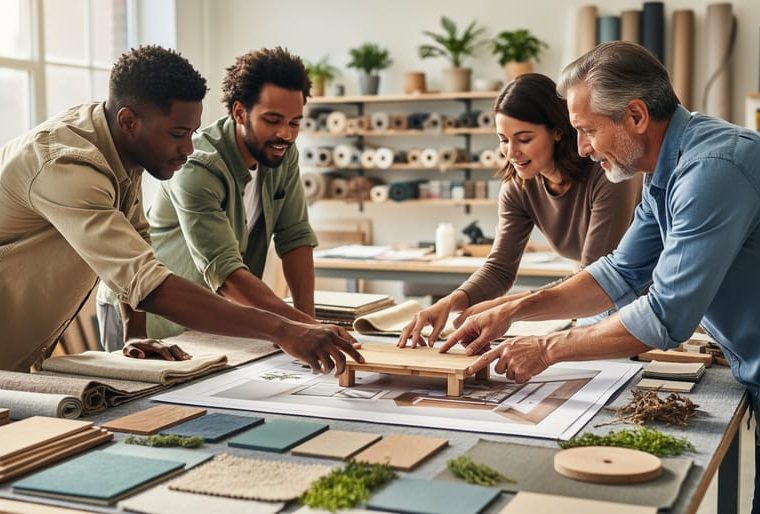
An engagement event is any gathering built to bring people into active conversation with design, whether that’s a hands-on workshop, a studio open house, a panel talk, a material showcase or a neighbourhood design walk. The point is participation. You don’t just look at a room or a product; you touch the fabric, ask the maker a question, and swap ideas with the person standing next to you.
That matters more than it might seem. Design is tactile and personal, and a photograph can only carry so much. Seeing how natural light shifts across a stone surface, or hearing a designer explain why they chose a particular joinery detail, changes how you think about your own space. Our international team has watched this play out across cities and cultures, and the pattern holds everywhere: people leave community events with sharper instincts and a few contacts they wouldn’t have found online.
Below, we look at the formats that suit a design audience, the real benefits of showing up in person, and practical advice for planning, attending and following up, so you can get far more from every event than a quick browse and a business card.
What Engagement Events Really Are (and What They Aren’t)
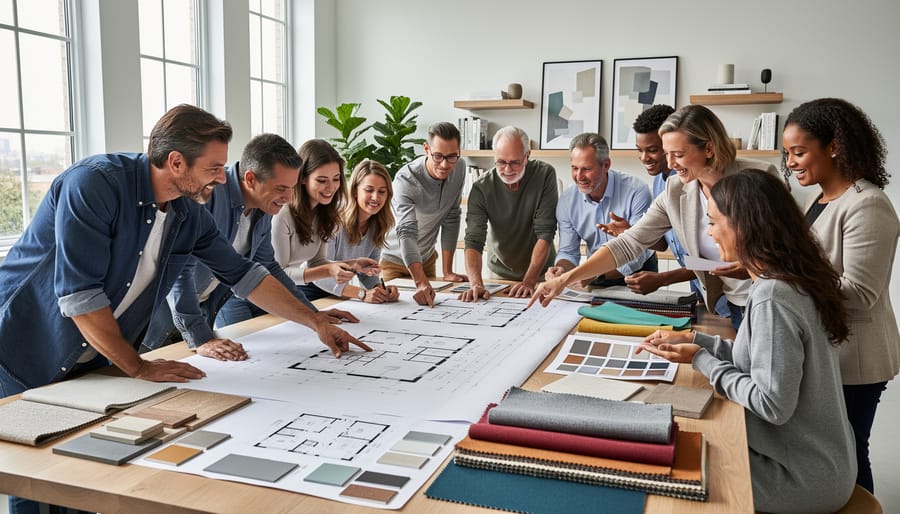
Think of the difference between watching a cooking show and standing in a kitchen with a friend, sleeves rolled up, tasting as you go. Both can be enjoyable, but only one leaves you changed. That’s the heart of what an engagement event is: a gathering built around two-way participation rather than one-way broadcasting.
In the world of design and home inspiration, this means the people in the room are not an audience to be addressed but contributors to be heard. A designer might share an idea, but the real value comes when a homeowner asks how it would work in a narrow hallway, or when someone offers a trick they discovered while renovating their own kitchen. The conversation moves in every direction, and everyone leaves with more than they brought.
It helps to be clear about what these events are not. A promotional event exists mainly to showcase a product and prompt a purchase. A sales presentation follows a script and measures success by orders placed. There’s nothing wrong with either, but the goal is different. An engagement event measures success by connection: Did people talk? Did they try something? Did they meet someone who shares their taste?
Three ingredients tend to sit at the centre:
– Participation: attendees do something, whether that’s voting on a palette, rearranging a sample board or contributing to a discussion.
– Conversation: time is protected for genuine exchange, not just a rushed question at the end.
– Shared making: creating or exploring side by side builds trust faster than any presentation.
When those elements are present, a room full of strangers starts to feel like a community.
The Many Faces of a Design Engagement Event
Talks and Panel Conversations
A good talk does something a magazine page can’t: it lets an idea answer back. When a designer explains why they chose a limewash finish over paint, you hear the doubts and trade-offs behind the decision, not just the polished result. Then the Q&A opens up, and listening becomes dialogue. Someone asks how it holds up with children, and the whole room learns something.
Hearing from creative international associates adds another layer. Designers and editors from different countries bring different instincts about light, space and materials, and a panel that mixes them often reveals how differently the same room can be imagined. It’s the same spirit you find in what an international creative agency can bring to the way we design our homes.
Talks are one format among several, and each suits a different kind of curiosity:
| Format | Best for | Level of participation | Typical takeaway |
|---|---|---|---|
| Talks | Fresh ideas and expert insight | Moderate, mainly through Q&A | A new way of seeing a space |
| Panel discussions | Comparing contrasting viewpoints | Moderate to high | Balanced perspectives on a topic |
| Exhibitions | Seeing materials and scale in person | Low to moderate | Confidence in colour and texture |
| Hands-on workshops | Learning practical skills | High | A skill you can use at home |
| Home tours | Real-life inspiration | Moderate | Practical ideas from lived-in spaces |
| Material and sample swaps | Peer recommendations | High | Trusted tips and new finds |
The best conversations leave people with a question to take home.
Exhibitions and Pop-Up Showcases
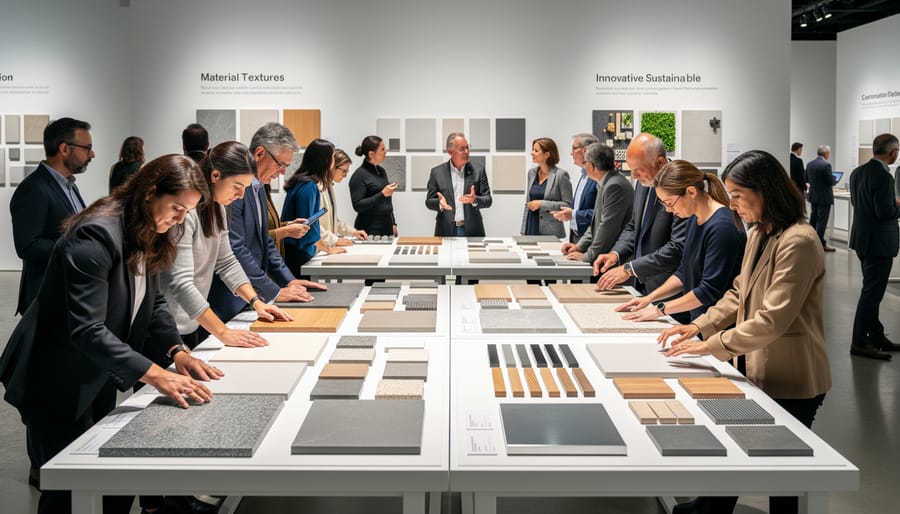
A swatch on a screen can’t tell you how a linen weave catches the afternoon light, or how a deep green wall feels once it surrounds you. Exhibitions and pop-up showcases fix that. Walking among real materials, you can run a hand over stone, compare oak against walnut, and see how a colour shifts from one corner of a room to another. Scale clicks into place too, because a sofa that looked modest in a photograph suddenly reads as generous, or imposing, when you stand beside it.
This is why exhibitions and community gatherings sit at the heart of the Pure Design approach. They bring our international team’s perspectives into a shared space where visitors can look, touch and talk. A casual remark from a stranger about a tile finish often sparks the idea you came looking for. Research on shared creative settings suggests that collaborative workshops build confidence and the same is true of a well-hosted showcase: seeing and discussing real pieces alongside others helps people trust their own eye and leave ready to make bolder choices at home.
Workshops and Hands-On Sessions

Workshops are where inspiration turns into something you can actually do. Instead of watching a designer describe a mood board, you sit down and build one, arranging fabric swatches, paint chips and timber samples until a scheme starts to feel like yours. That shift from observing to making is what keeps the creative process moving.
Hands-on sessions also build confidence in a gentle way. When you try something alongside others, a slightly wobbly first attempt becomes part of the fun, and a quick tip from the person beside you often unlocks the next step.
For homeowners, the practical payoff is real. A storage planning session might have you measuring a cupboard and sketching how shelves, baskets and hooks could work harder in the same footprint. A layout exercise could invite you to move paper furniture around a scaled floor plan, testing walkways and focal points before a single piece is bought.
You leave with sharper instincts and a few skills you can use at home. Perhaps best of all, you leave having seen how many different answers one small room can have.
Why Gathering in Person Changes How We Design
There is a particular kind of inspiration that only arrives when you are standing in a room with other people. Scrolling gives you ideas, but a gathering gives you ones that stay with you. When a designer describes why they chose a certain plaster finish, or you watch someone run a hand across a linen swatch, the idea gets attached to a moment, a voice and a feeling. That is why so many people say their clearest design decisions came after an event, not before it. It is also where inspiration and creativity stop being abstract ideas and start shaping real choices at home.
Picture two strangers at a materials showcase, both eyeing the same sample of oak with a warm, slightly grey tone. One mentions she is planning a kitchen; the other, a hallway. Within minutes they are comparing how the colour changes in north-facing light, sketching a floor plan on the back of a programme, and swapping notes on what they would do differently next time. Neither came looking for advice, yet both leave with something they could not have found alone.
That kind of exchange is quietly powerful for homeowners. Peer recommendations carry a trust that product descriptions rarely match, because they come from someone who has lived with the result. Seeing materials, scale and proportion in person also helps you avoid costly surprises, which makes for smarter, more confident buying decisions.
There is encouragement in it, too. Hearing how others tackled a tricky layout or a tight budget reminds you that every beautiful home began with uncertainty. Seeing other people’s creative journeys up close makes your own feel possible, and that confidence is often what finally turns a long-held idea into a finished room.
How to Shape an Event That Brings People Together
A good gathering rarely happens by accident. Whether you’re curating a full exhibition or hosting a dozen neighbours around a kitchen table, the same few decisions shape how welcome people feel and how much they take away. The best events start small in their thinking, with one clear idea and a room that invites people to speak.
Here’s a sequence that works at almost any scale:
- Define the purpose in a single sentence, such as “help homeowners plan better storage” or “let people handle and compare natural materials.”
- Choose a theme that is narrow enough to spark focused conversation, like warm minimalism, small-space layouts or colour in everyday rooms.
- Pick a space that suits the numbers. A cosy room that feels full beats a cavernous hall that feels empty, and step-free access and good natural light make everyone more comfortable.
- Build in at least two interactive moments, such as a material table to touch, a floor plan to sketch on, or a short group challenge.
- Invite a mix of voices: seasoned designers, first-time renovators, makers, students and curious neighbours. Different experience levels make for richer questions.
- Plan the flow so there’s a warm welcome at the door, a clear starting point, and unhurried time to mingle.
- Follow up within a few days, thanking attendees and asking what they’d love to see next.
Once the structure is in place, pay attention to the small signals of hospitality. Name tags with a fun prompt, such as “the room I’m planning next,” give strangers an easy way in. Seating that encourages small clusters tends to produce better exchanges than rows facing forward.
It also helps to leave a little space unscripted. Some of the most memorable moments come when two people discover they’re wrestling with the same awkward alcove, and no agenda could have planned it. Resist the urge to fill every minute, and let the room do some of the work.
Keeping the Conversation Going After the Event
The real work of an engagement event often begins once the doors close. The energy in the room is valuable, but it fades fast unless you give people a reason to stay connected.
Start by sharing highlights while memories are fresh. A short recap, a handful of strong photographs and a few standout moments from a talk or workshop let attendees relive the day and show those who missed it what they overlooked. Good recaps read like stories rather than reports, which is where thoughtful editorial writing can make even a simple summary feel personal and inviting.
Next, put your community in the spotlight. Invite attendees to share how a workshop shaped their layout, or what a material sample inspired in their own home. Featuring their projects and stories tells everyone that participation is genuinely valued, and it often draws quieter voices into the conversation.
Keep discussions alive online by posing open questions, sharing resources mentioned during the event, and replying warmly to comments. A dedicated thread or group gives people a place to swap ideas between gatherings.
Finally, ask for feedback. A few simple questions about what worked and what people want next will shape better events. The cycle then feeds itself: live experiences generate content and conversation, and that digital activity draws people back to the next gathering.
Questions Design Lovers Often Ask About Events
Whether you’re curious about your first gathering or dreaming of hosting one, a few questions come up again and again. Here are warm, practical answers to help you feel ready.
Do I need design experience to attend?
Not at all. Engagement events welcome everyone, from complete beginners planning their first home project to seasoned enthusiasts. Curiosity is the only entry requirement.
What should I bring to a workshop?
A notebook, a phone for snapping ideas, and any floor plans or photos of your space that you’d like to talk through. Most hands-on sessions provide the materials, so you can simply turn up and get involved.
How can I find events near me?
Look to local design studios, showrooms, community noticeboards and the event pages of design publications you already follow. Online communities are also a friendly place to ask what’s happening in your area.
How do I start a small design meetup of my own?
Pick a simple theme, such as swapping paint swatches or sharing before-and-after photos, and invite a handful of friends or neighbours to a comfortable space. Keep it relaxed, leave room for conversation, and let it grow naturally from there.
If you’re still on the fence, remember that every community started with someone saying hello. Start small, stay curious, and trust that the conversations will do the rest.
A good design idea rarely stays on the page. It travels through conversations, shared materials, and the quiet encouragement of someone saying, “I’d never have thought of that.” Engagement events give those moments somewhere to happen, and over time they turn a scattered readership into a living, breathing design community.
Whether it’s a talk that sparks a lively Q&A, an exhibition where you finally feel the weight of a fabric, or a workshop where you sketch a layout alongside strangers, the pattern is the same. People arrive as individuals and leave as part of something larger.
So if there’s a gathering near you, consider taking a seat. And if there isn’t, perhaps it’s your turn to host one, even a small one, with a few friends and a pile of samples on the table. Every thriving community begins with a single invitation, and the most inspiring spaces are always the ones we imagine together.